The "Why" in 3 Simple Points
The International Day of Action for Rivers is a global maintenance check for the world’s plumbing, ensuring our waterways remain unobstructed to manage the physical energy and sediment that protect our communities.
River Health is About Safety: When a river gets “clogged” by trash or poorly designed dams, the water’s energy has nowhere to go. That’s when the river breaks banks and floods neighborhoods.
River Health is About the “Bones”: Rivers carry silt and sediment (the “bones” of the water). This material builds up the riverbanks and keeps the ground from washing away.
River Health is About Data: We use this day to check the “vitals” of the water—like its clarity and the types of bugs living on the bottom—to make sure the system is running correctly.
The Annual Hydraulic Audit: Checking the Planet's Plumbing
Think of the world’s rivers as a massive, interconnected plumbing system. The International Day of Action for Rivers is the annual “maintenance check” for this global infrastructure. It isn’t just a day to appreciate the view; it’s a targeted effort to audit the hydraulic integrity of our river basins. When a river is healthy, it moves water and nutrients efficiently. When it’s degraded, the entire “system” of the landscape begins to fail. This day serves as a coordination point for communities to reclaim the management of their most vital natural infrastructure.
The History of the Curitiba Declaration
The movement was formalized in Curitiba (koo-ree-TEE-bah), Brazil, during the first International Meeting of People Affected by Dams. Representatives from 20 countries signed the Curitiba Declaration, mandating a global response to the disruption of the world’s waterways. This document established the baseline for defending physical landscapes and river-dependent communities against industrial mismanagement.
We extend this legacy of documentation through BasinScore™. By turning our Global River Health Index and the physical literature of the water into original tracks, we bridge the gap between scientific observation and human empathy. A BasinScore™ is a rhythmic river data profile where data is the heartbeat and music is the voice. When you hear a score, you are hearing the current state, the history, and the future of a living basin. It is our way of ensuring that river data always hits the right note.
A Decade of Action: Annual Themes
The focus of this movement evolves annually to meet current challenges. Here are the official themes from the last ten years:
2026: Protect Rivers, Protect People – The link between hydraulic health and infrastructure safety.
2025: Our Rivers, Our Future – Long-term sustainability of free-flowing rivers.
2024: Water for All – Equitable management and access to unpolluted freshwater.
2023: Rights of Rivers – Recognizing rivers as physical entities with the right to flow.
2022: The Importance of Rivers for Biodiversity – Monitoring high-density biological zones.
2021: Rights of Rivers – The inaugural global push for legal standing for waterways.
2020: Women, Water, and Climate Change – Leadership in managing watershed resilience.
2019: Women and Rivers – Celebrating the stewardship of freshwater resources.
2018: 20 Years of Action for Rivers – A technical audit of global river restoration data.
2017: Women, Water, and Life – Community-led efforts to sustain local river health.
Mapping the Global Basin: Live Action Reports
Find an event near you, or register with the links below, and we will add your event to the map.
Mechanics of Flow: Kinetic Energy and "Heart Health"
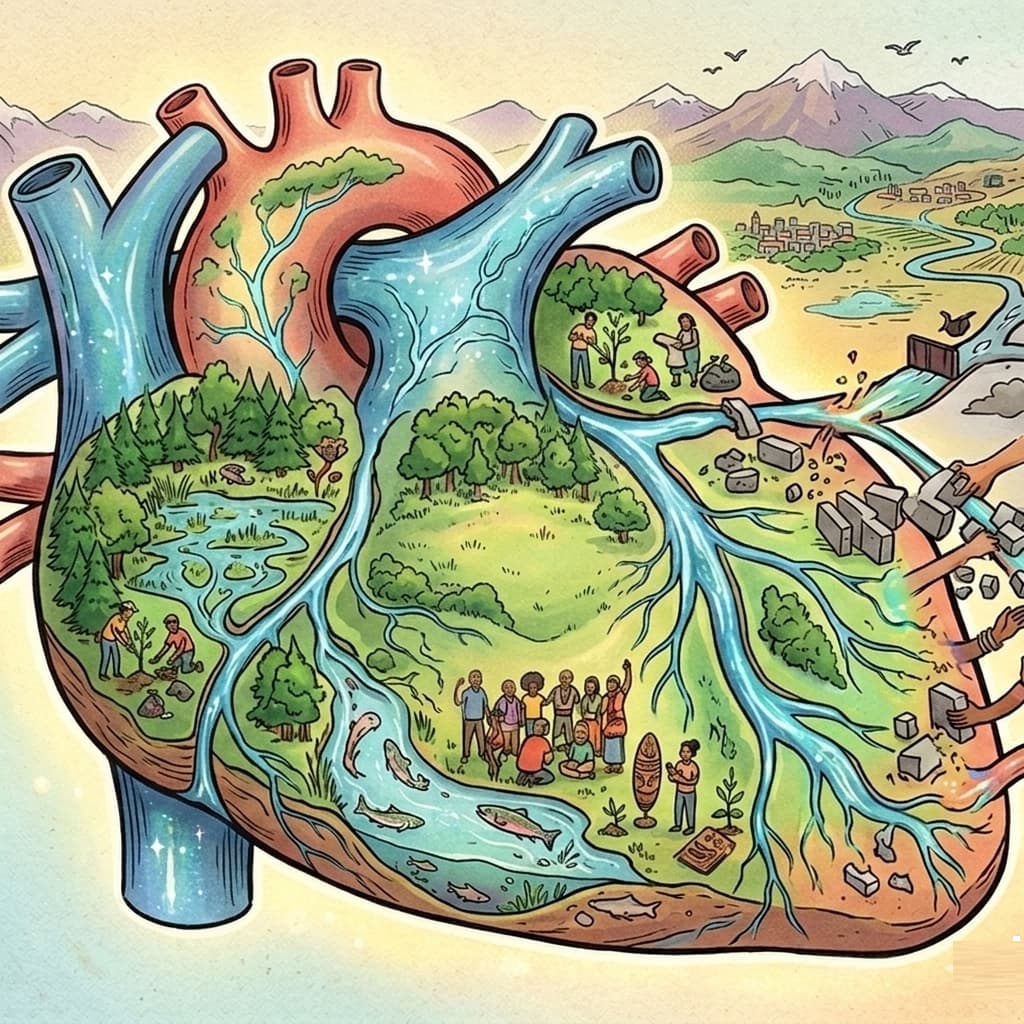
A river is a pressurized conveyor of water, sediment, and kinetic energy. Just like a human heart needs clear arteries to pump blood, a river needs an unobstructed path to manage its energy. When the natural “pulse” of a river is blocked by poorly designed barriers or debris, that energy doesn’t just disappear—it gets redirected. This can lead to hydraulic failure, causing the river to burst its banks and damage the homes and businesses nearby. Protecting the river’s path is a mechanical necessity for keeping our communities safe.
Technical Advocacy: How to Read the River
You don’t need a PhD to help audit a river’s health. You just need to look at the physical indicators of the system:
Turbidity: This is a measure of turbidity the cloudiness of the water. High turbidity means the water is carrying too much loose soil or pollution, which can “choke” the system.
The “Bug” Test: We look for benthic macroinvertebrates. These bottom-dwelling bugs provide a living record of water quality. If they are missing, the river’s chemistry is likely out of balance.
Bank Stability: Checking the health of the bank’s root systems to see if the river has the “armor” it needs to absorb heavy rains.
Practical Ways to Get Involved
Taking action moves beyond awareness into tangible support. Here is how you can contribute effectively:
Direct Funding: Donate to organizations like International Rivers or local watershed groups. These funds support legal fees for river protection and physical restoration projects.
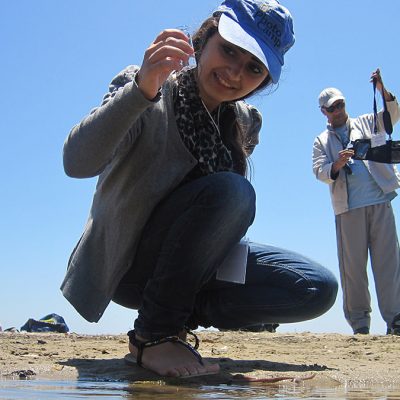
Citizen Science: Use tools like a Secchi disk (SEH-kee) to measure turbidity or join a local group to sample benthic macroinvertebrates. This data is vital for creating a long-term record of river health.
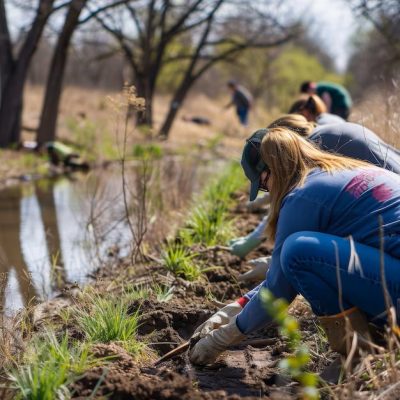
Physical Cleanup: Join organized “trash bashes” to remove physical obstructions from the banks. Removing plastic and debris prevents them from breaking down into microplastics that contaminate the sediment.
Policy Monitoring: Stay informed on local zoning and watershed management plans. Support the maintenance of riparian buffers —the vegetated zones that act as biological anchors for the riverbank.
Keep them clean!
Beyond global declarations, river health is maintained through the daily act of keeping the channel clear. Trash, industrial runoff, and agricultural waste are physical obstructions that disrupt the hydraulic function of the basin. Action begins with local stewardship: removing debris from the banks and monitoring nearby sites to ensure the river flows with the velocity and clarity needed to sustain the life and the infrastructure that depend on it.
F.A.Q.
It is a global mobilization observed annually in mid-March focused on auditing the hydraulic health of freshwater systems and advocating for the restoration of river basins.
The movement was formalized in 1997 following the first International Meeting of People Affected by Dams in Curitiba, Brazil.
It is a foundational document signed by representatives from 20 countries that officially mandated a global day of action to reclaim the health and management of the world’s waterways.
It serves as a technical mobilization point for communities to treat rivers as vital natural infrastructure rather than static scenery, ensuring they remain healthy and free-flowing.
The event is globally coordinated by the organization International Rivers, which provides a hub for local events and data.