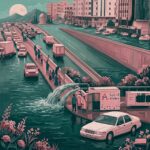
Lyrics: The Indus River "Blind Dolphin"
[Verse 1] Three thousand one hundred eighty kilometers of mountain and ice, I remember the Glacier Blue before the world took its slice. Before the three thousand one hundred eighty was a measurement of how much waste a current could hold, The Indus River spit mountain water, not industrial gold. The Sindhi and Punjabi riverine culture wasn’t a “legacy” or debris, It was the weight of the nets and the timber—it was you and it was me. Now the Himalayan gorges are just jagged, rusting iron teeth, Chewing on the industrial waste and the chemicals underneath.
[Chorus] The Health Score is an F; the ledger doesn’t lie. One-hundred and fifty years on the clock before the chemicals dry. Emergency drinkable? No. Don’t trust the bacteria in the flow. The Indus River is a machine with a fractured, concrete head. The Glacial Melt is the Villain, a flood that’s hollow and white, Tearing through the basin in the middle of the night.
[Verse 2] The Blind Dolphin isn’t a myth; it’s a body hitting a barrage wall, Watching the Indus River as the industrial sludge starts to crawl. A Wildlife Ghost caught in the current and the irrigation foam, Losing the Sanskrit name that used to be a home. But Zero Waste Ladakh is a wrench thrown into that grinding gear, Scrubbing the high-altitude plastic and the hundred-year smear. They’re hauling the Industrial Villain out of the water by hand, Because the sand in our palm is the only home we have left to stand.
[Outro] The Lion is dying, but the Sanskrit name is a physical act. When the Indus River breaks, we’re the ones who react. One-hundred and fifty years to fix what we allowed to break, For the sake of the next man’s thirst, and every breath we take. The clock is ticking, but the hands are finally on the stone.
[The Hook] “I remember when the water was cold enough to bite, before it turned into this rusted brown flood. Three thousand one hundred eighty kilometers of a dying King. The Blind Dolphin is hitting concrete walls, and we’re looking at a one-hundred and fifty year recovery. But Zero Waste Ladakh is out there, pulling the poison out by hand. We aren’t just cleaning a river; we’re trying to save the Indus River before the world follows it down.”
The Story of "Blue Dolphin"
This isn’t a polished anthem; it’s a sonified autopsy of a dying King. “Blind Dolphin” tracks the 3,180-kilometer descent from pristine Himalayan ice into an industrial nightmare. The track captures the claustrophobia of the irrigation barrages, where the sonar of the river’s most ancient residents hits a concrete dead end. We aren’t looking at a “release”—we’re looking at a 150-year recovery clock that has already started ticking.
The data mapped here is the sound of the “Lion’s Teeth” rusting. As chemical factories in the Punjab pump heavy metals into the Sanskrit “Great Body of Water,” the rhythm becomes a fractured, hollow flood. The only break in the noise is the work of Zero Waste Ladakh. They are the physical wrench in the gear, pulling the “Industrial Villain” out of the water by hand at the roof of the world. This is the sound of the sand in our palms being the only home we have left to stand on.
Indus River Health Report
Health Score: F
Emergency Drinkable?: No. Extreme bacterial and heavy metal risk.
Primary Villain: Glacial Melt & Industrial Waste
Visual Color: Glacier Blue (Natural) vs. Opaque Ochre (Current).
Indigenous Loss: Devastation of the Sindhi and Punjabi riverine civilizations.
Wildlife Ghost: Indus River Dolphin; blind and trapped between irrigation barrages.
Recovery Clock: 150+ Years
Restoration Effort: Zero Waste Ladakh
Country: Pakistan, India, China
Name Origin / Etymology: Endonym: Sindhu. Etymology: “Great Body of Water” or “River.” Language: Sanskrit.
Lore & Legends: The Lion River. Tibetan Lore says the Indus flows from the mouth of a lion. The jagged Himalayan gorges are seen as the lion’s physical teeth; if the water turns black with filth, it is a sign that the lion is dying and the world will follow.
Narrative Summary: The Indus is the “King of Rivers” but is being physically dismantled. Between the melting of the Himalayan glaciers and the massive pollution from chemical factories in the Punjab, the river is becoming a toxic, unpredictable flood-threat. The physical damming has fragmented the habitat of its unique, blind dolphins.
Deep Dive: Interpreting the Data
Grade A (Pristine): The water is safe to drink with minimal filtration. The ecosystem is intact, and indigenous traditions thrive alongside the natural flow.
Grade B (Stable): Healthy but showing signs of stress. Some agricultural or urban runoff is present, but the river remains a reliable resource for the community.
Grade C (At Risk): Significant pollution is present. The water requires professional treatment to be safe, and certain wildlife species are beginning to struggle or migrate.
Grade D (Critical): High toxicity levels. The river has become dangerous for humans and animals alike, and the “Recovery Clock” is now measured in decades.
Grade F (Failing): The river is biologically “dead” or extremely toxic. It is unsafe to touch or drink, and the local indigenous way of life has been fundamentally broken by industrial “Villains.”
Here is the updated list with bullet points and the definitions following the colons:
Health Score: A simplified rating or grade used to communicate the overall biological and environmental integrity of a specific location.
Emergency Drinkable?: An assessment of whether the primary water source can be safely consumed by humans in a crisis and a list of the specific contaminants preventing it.
Primary Villain: The specific human activities, industries, or mechanical processes identified as the leading causes of environmental degradation in the area.
Visual Color: A comparison between the appearance of the environment in its healthy state versus its current appearance under stress.
Indigenous Loss: A measure of the impact on local human populations, specifically those whose traditional livelihoods and cultures are tied to the natural resource.
Wildlife Ghost: A spotlight on a specific animal or plant species that has become rare or functionally extinct, serving as a symbol for the ecosystem’s decline.
Recovery Clock: The estimated duration of time—often measured in decades or centuries—required for the system to fully heal if all damaging activities were to cease.
Restoration Effort: The names of the specific groups, alliances, or legal movements working to protect or rehabilitate the area.
Country: The geopolitical regions or nations that have jurisdiction over, or are directly impacted by, the state of the environment.
Name Origin / Etymology: An exploration of the linguistic history of the area’s name, showing how it reflects the cultural or religious history of the people who live there.
Lore & Legends: The traditional stories, spiritual beliefs, or unexplained natural phenomena that give the location its cultural and sacred significance.
Narrative Summary: A concise explanation of the “cause and effect” chain, detailing how specific stressors lead to the physical collapse or transformation of the landscape.
About BasinScore™
Every track we produce is a BasinScore™—a rhythmic data profile that transforms the complex metrics of our Global River Health Index into a visceral auditory experience via the Basin Beats™ studio. By centering our production on this singular metric, we bridge the gap between cold scientific observation and human empathy, allowing listeners to hear the current health, industrial history, and future outlook of a living river basin. These scores provide an essential “vibe check” on the water, highlighting critical river-related flood risks and conservation needs through a beat that ensures the data always hits the right note.