The 10 Largest River Systems in Asia
Rivers carry the history and economic vitality of the regions they touch. For those who study the intricate relationship between hydrology and culture, the East offers some of the most compelling case studies on Earth. From the glacial heights of the Tibetan Plateau to the sprawling industrial deltas of the coast, these ten river systems represent the sheer scale of the continent’s drainage basins. Whether they are known as “Mother Rivers” or “Angry Waters,” these waterways serve as the primary architects of the land, carving out deep canyons and sustaining billions of lives along their winding paths.
10. Salween River
Length: 3,289 km (2,044 miles)
Countries: China, Myanmar, Thailand
Trivia:
It is known as the Nu River (Noo) in China, meaning “Angry River” due to its fierce, unbridled currents.
It remains one of the longest free-flowing rivers in the world, largely uninterrupted by large-scale dams.
The Upper Salween basin is part of a UNESCO World Heritage site where three of Asia’s great rivers run parallel to one another.
BasinScore™ Track: Silk Thread
9. Amur River
Length: 4,444 km (2,761 miles)
Countries: China, Russia, Mongolia
Trivia:
Called the Heilong Jiang (Hay-loong Jyahng) or “Black Dragon River” in Chinese.
It serves as a massive natural border between the Russian Far East and Northeastern China.
The surrounding basin is a critical refuge for rare wildlife, including the Siberian tiger.
BasinScore™ Track: Benzene Bounce
8. Brahmaputra River
Length: 3,848 km (2,391 miles)
Countries: China, India, Bangladesh
Trivia:
It originates from the Angsi Glacier as the Yarlung Tsangpo (Yahr-loong Tsahng-paw).
The river carves out the Yarlung Tsangpo Grand Canyon, which is recognized as one of the deepest canyons on the planet.
It is famous for the “tidal bore,” a wall of water that rushes upstream during high tides in the bay.
BasinScore™ Track: Father Brahma
7. Indus River
Length: 3,180 km (1,976 miles)
Countries: China, India, Pakistan
Trivia:
The river begins its journey in western Tibet near Mount Kailash, a mountain sacred to multiple spiritual traditions.
It was the foundation for the Indus Valley Civilization, one of the “big three” early civilizations of the Old World.
It flows through high-altitude desert mountain ranges before reaching the Arabian Sea.
BasinScore™ Track: Blind Dolphin
6. Lena River
Length: 4,400 km (2,734 miles)
Countries: China (tributary sources), Russia
Trivia:
While its main body flows through Siberia, its vast drainage network extends into the northern reaches of the region.
The “Lena Pillars”—towering limestone cliffs along its banks—are a stunning natural UNESCO site.
It is one of the three great Siberian rivers that empty into the Arctic Ocean.
BasinScore™ Track: Returning Elyu-Ene
5. Mekong River
Length: 4,350 km (2,703 miles)
Countries: China, Myanmar, Laos, Thailand, Cambodia, Vietnam
Trivia:
Known in China as the Lancang River (Lahn-tsahng), meaning “turbulent river.”
It is often called the “Danube of the East” due to its vital role as a multi-national trade route.
The river is a biological hotspot, home to giant freshwater stingrays and the rare Mekong giant catfish.
BasinScore™ Track: Hungry Blue
4. Ob–Irtysh River
Length: 5,410 km (3,362 miles)
Countries: China, Kazakhstan, Russia
Trivia:
This is a hybrid system: the Irtysh begins in the Altay Mountains of China and is actually longer than the Ob before they join.
The Ob carries more water volume; the two meet in Russia, where the Irtysh flows into the Ob to finish the journey to the Arctic.
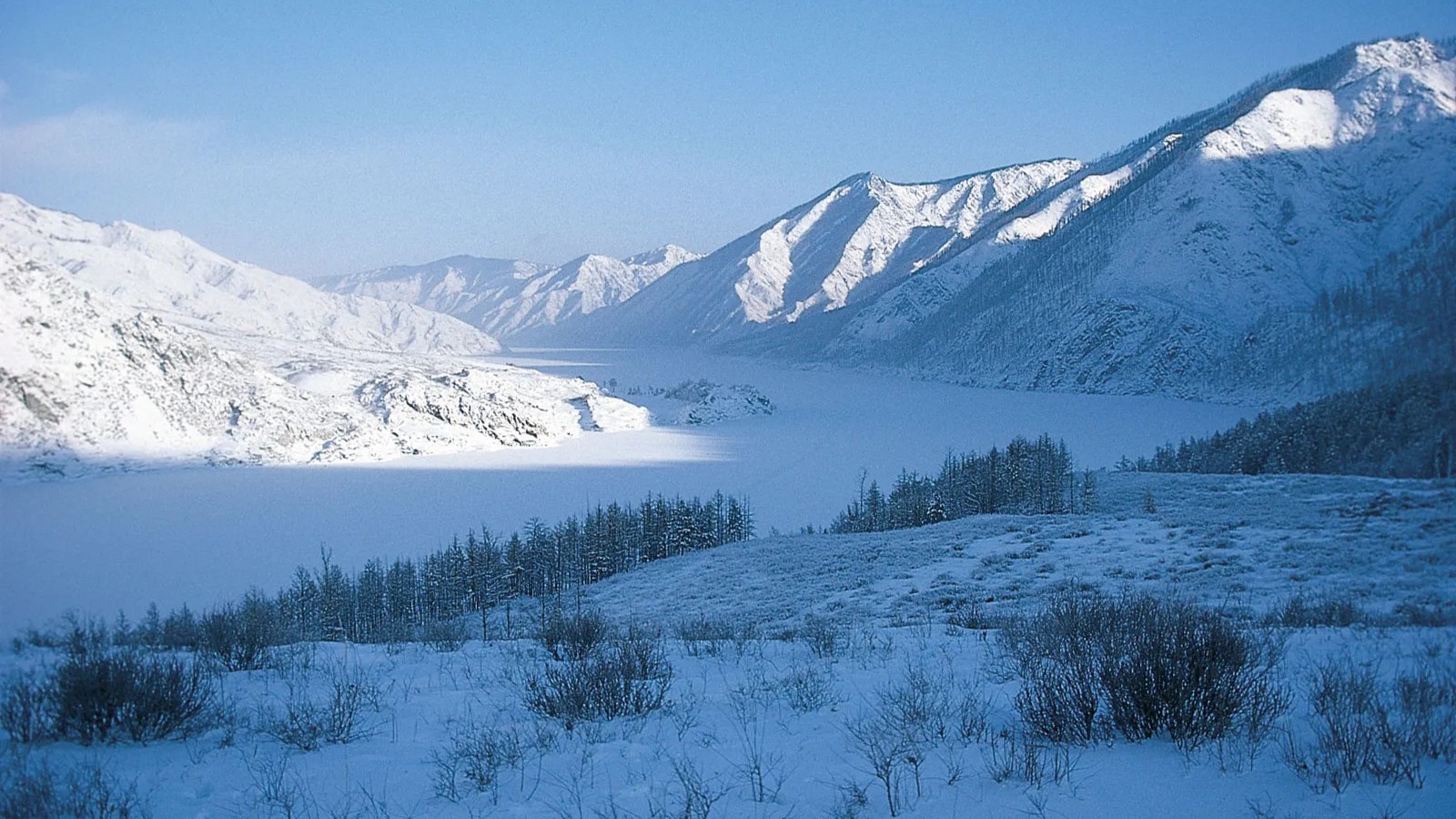
In the winter, the lower reaches freeze so solidly that the river is used as a heavy-transport ice road.
BasinScore™ Track: Golden Eagle
3. Yellow River
Length: 5,464 km (3,395 miles)
Countries: China
Trivia:
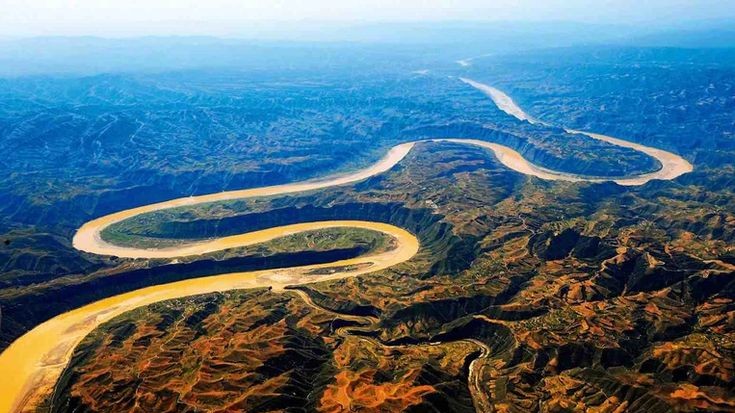
Its name comes from the fine, yellow loess silt it picks up as it flows through the Loess Plateau.
Known as the “Cradle of Chinese Civilization,” as its valley was the primary site of early Chinese agricultural development.
Because the silt raises the riverbed, the water often flows “above” the surrounding plains, requiring massive levees.
BasinScore™ Track: The Cradle
2. Yenisey River
Length: 5,539 km (3,442 miles)
Countries: China (headwaters), Mongolia, Russia
Trivia:
The system includes the Selenga River, which draws from the mountainous borders of northern China and Mongolia.
It is the largest river system flowing into the Arctic Ocean by volume.
The river system is connected to Lake Baikal, which contains roughly 20% of the world’s unfrozen surface fresh water.
BasinScore™ Track: Plutonium Rain
1. Yangtze River
Length: 6,300 km (3,915 miles)
Countries: China
Trivia:
Known as the Chang Jiang (Chahng Jyahng) or “Long River,” it is the longest river in Asia.
The river basin is a powerhouse for the modern world, generating a massive portion of the regional GDP.
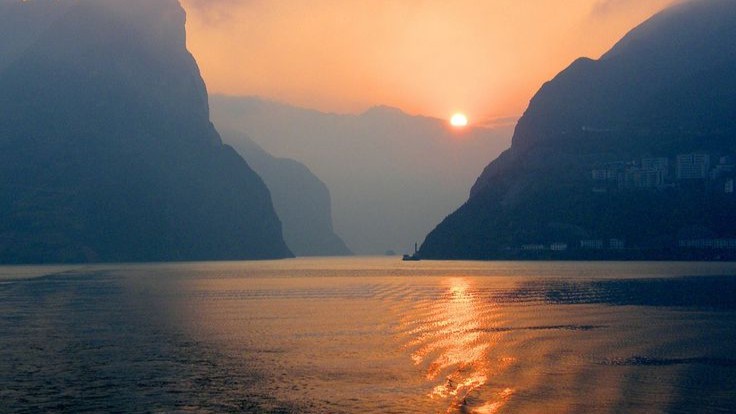
It flows through the famous Three Gorges region, known for its dramatic limestone cliffs and the world’s largest hydroelectric dam.
BasinScore™ Track: Tibetan Ice
The Measurement Paradox: Why Length is a Moving Target
Ranking rivers by length is rarely a settled science; in fact, it is often a subject of heated debate among cartographers and hydrologists. A river’s “official” length can change based on several complex factors:
Defining the Source: Determining exactly where a river begins—whether it’s the furthest trickle in a mountain range or the mouth of a specific lake—can vary significantly.
Seasonal Fluctuations: Many rivers expand and contract with seasonal snowmelt or monsoons, making a static measurement difficult.
The Delta Dilemma: Deciding exactly where a river ends and the sea begins is a challenge, especially in shifting, multi-channel deltas.
Human Intervention: Dams and canalization can physically shorten or lengthen a river’s natural path over time.
About BasinScore™
A BasinScore™ (Rhythmic River Data Profiles produced by Basin Beats™) is a system where data is the heartbeat and music is the voice. By turning our Global River Health Index and the literature of the water into original tracks, we bridge the gap between scientific observation and human empathy.
Featured on the new album, “The Human Basin,” these tracks for Asia’s top ten rivers prove that when you hear a BasinScore™, you aren’t just listening to a song—you are hearing the current state, the history, and the future of a living basin. Each score offers a vibe check on the water, providing insight into conservation efforts and general awareness through the beat. Whether we are scoring legendary global arteries or lesser-known inland waterways, this format ensures the data always hits the right note.
Keep them clean!
As we track the rhythms of these great giants, we must remember that they are more than just lines on a map—they are living systems. Every kilometer of the Yangtze or the Mekong carries the weight of human impact. Pollution, from industrial runoff to plastic waste, acts as a “noise” that disrupts the natural harmony of the basin. Protecting these waterways is not just about environmentalism; it’s about preserving our collective heritage and ensuring that the heartbeat of our planet remains strong. By reducing our footprint and advocating for cleaner banks, we ensure that these rivers continue to flow for generations to come.
F.A.Q.
It is the source of nearly all of Asia’s major river systems. The plateau holds the largest store of freshwater outside the North and South Poles, providing the lifeblood for approximately 2 billion people.
Control over the headwaters provides immense geopolitical leverage. By managing the flow of rivers like the Mekong and Brahmaputra, China can influence the water and energy security of downstream nations like India, Vietnam, and Bangladesh.
They are part of the same system. The Irtysh is technically a tributary of the Ob, but it is actually longer than the main stem of the Ob before they join, making their combined length one of the world’s longest.
In Chinese, it is the Heilong Jiang. The name refers to its dark, tannin-rich waters and its winding, serpentine shape that resembles a dragon across the landscape.
No. Length is often debated because it’s hard to define exactly where a river starts (the source) and ends (the delta), and human-made dams can physically change the river’s path.
Additional resources
- Freshwater Health Index
- Asia River Monitoring | SEI
- World Enters “Era of Global Water Bankruptcy” UN Scientists Formally Define New Post-Crisis Reality for Billions | United Nations University
- Melting Third Pole Warns of the Price of Delay – Asia Pathways
- Asia and Pacific Gallery | Program in Water Conflict Management and Transformation | Oregon State University