logo-b81fc6af2faedb728fbd5fa5eeed23730c5b8be653318097907f3f0a5adbc5a6
Click for a Unique Window into the Untouched Amazon Waterway: Watch Live Now! (Courtesy of Junglekeepers)

Yangtze River Song: “Tibetan Ice” – Lyrics & The Sonified Sound of the Iron Silt

The latest release from Basin Beats, produced by BasinScore™, presents the sound of the Yangtze—a 6,300-kilometer industrial odyssey vibrating with the ghosts of the extinct Paddlefish. This track sonifies a Grade D ecosystem in crisis, where ancient mountain legends collide with the hard data of a failing recovery clock.
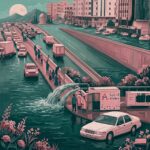
Love this cover artwork? Check out the 5 alternatives above the comment section below.

Table of Contents

Lyrics: The Yangtze River "Tibetan Ice"

[Verse 1] Six thousand three hundred kilometers of silt and scale, From the Tibetan ice where the thin winds wail. The Yangtze cuts through the shipyard fog, Past the Shanghai lights and the chemical smog.  Ancient bronze Bianzhong chimes are choked by the pipes, Under a sky of industrial, grey-green stripes. Green River watchers are treading on the mud-caked shore, Where the Goddess Yao Ji don’t smile no more.

[Chorus] Grade D health—that’s a failing grade, An eighty-year debt that’s got to be paid. Keep the cup dry, there’s mercury in the flow, Plastics in the gut where the current used to go. The River Mother’s heart is a corroded valve, Waiting on the Green River for a bitter salve.

[Verse 2] Psephurus gladius, the sword-snout is gone, Twenty-twenty was the end of a million-year dawn. The Paddlefish is a ghost in the sluice-gate teeth, While the heavy metals settle in the bed underneath.  Through polyethylene rafts and the urban drain, Green River sensors are measuring the pain. Sichuan guards the tangled twine and the empty bay, Ten years of silence for the Yangtze today.

[Outro] Eighty years. The clock is a rust-mark on the stone. No water for the throat. Just the long road back. The Yangtze… 

The Story of "Tibetan Ice"

“Tibetan Ice” explores the tension between the Yangtze’s legendary past and its industrial present. The track samples the “Long River” at its breaking point—capturing the transition from the high Tibetan ice to the chemical fog of the Shanghai estuary. We’ve sonified the 80-year recovery clock as a persistent, rhythmic tension that underpins the entire track, reminding the listener that time is a luxury the basin no longer has.

The lore of Yao Ji, the Goddess of the Peaks who guided ships through the Wu Gorge, is woven into the melody via the haunting breath of the Xun (ocarina). However, this ancient guidance is now obscured by the “Primary Villain” of the track: a relentless flow of plastics and heavy metals. With the 2020 extinction of the Chinese Paddlefish, the “Wildlife Ghost” of this release, the song serves as both a requiem and a call to action for the Green River restoration efforts.

Yangtze River Health Report

  • River Name: Yangtze (Chang Jiang – “Long River”)

  • Country: China

  • Health Score: D

  • Emergency Drinkable?: No (Severe Chemical Risk)

  • Primary Villain: Plastics & Heavy Metals

  • Visual Color: Natural: Silt-yellow to blue | Current: Murky grey-green

  • Indigenous Loss: Loss of the “River Mother” subsistence and cultural heritage

  • Wildlife Ghost: Chinese Paddlefish (Psephurus gladius); extinct 2020 (Dams/Overfishing)

  • Recovery Clock: 80 Years

  • Restoration Effort: Green River (四川省绿色江河)

  • Narrative Summary: The Yangtze carries more plastic into the ocean than almost any other river. Massive dams have blocked migration, and industrial runoff from megacities has poisoned the sediment. A 10-year fishing ban is currently in place to save what’s left.

Deep Dive: Interpreting the Data

  • Grade A (Pristine): The water is safe to drink with minimal filtration. The ecosystem is intact, and indigenous traditions thrive alongside the natural flow.

  • Grade B (Stable): Healthy but showing signs of stress. Some agricultural or urban runoff is present, but the river remains a reliable resource for the community.

  • Grade C (At Risk): Significant pollution is present. The water requires professional treatment to be safe, and certain wildlife species are beginning to struggle or migrate.

  • Grade D (Critical): High toxicity levels. The river has become dangerous for humans and animals alike, and the “Recovery Clock” is now measured in decades.

  • Grade F (Failing): The river is biologically “dead” or extremely toxic. It is unsafe to touch or drink, and the local indigenous way of life has been fundamentally broken by industrial “Villains.”

Here is the updated list with bullet points and the definitions following the colons:

  • Health Score: A simplified rating or grade used to communicate the overall biological and environmental integrity of a specific location.

  • Emergency Drinkable?: An assessment of whether the primary water source can be safely consumed by humans in a crisis and a list of the specific contaminants preventing it.

  • Primary Villain: The specific human activities, industries, or mechanical processes identified as the leading causes of environmental degradation in the area.

  • Visual Color: A comparison between the appearance of the environment in its healthy state versus its current appearance under stress.

  • Indigenous Loss: A measure of the impact on local human populations, specifically those whose traditional livelihoods and cultures are tied to the natural resource.

  • Wildlife Ghost: A spotlight on a specific animal or plant species that has become rare or functionally extinct, serving as a symbol for the ecosystem’s decline.

  • Recovery Clock: The estimated duration of time—often measured in decades or centuries—required for the system to fully heal if all damaging activities were to cease.

  • Restoration Effort: The names of the specific groups, alliances, or legal movements working to protect or rehabilitate the area.

  • Country: The geopolitical regions or nations that have jurisdiction over, or are directly impacted by, the state of the environment.

  • Name Origin / Etymology: An exploration of the linguistic history of the area’s name, showing how it reflects the cultural or religious history of the people who live there.

  • Lore & Legends: The traditional stories, spiritual beliefs, or unexplained natural phenomena that give the location its cultural and sacred significance.

  • Narrative Summary: A concise explanation of the “cause and effect” chain, detailing how specific stressors lead to the physical collapse or transformation of the landscape.

About BasinScore™

Every track we produce is a BasinScore™—a rhythmic data profile that transforms the complex metrics of our Global River Health Index into a visceral auditory experience via the Basin Beats™ studio. By centering our production on this singular metric, we bridge the gap between cold scientific observation and human empathy, allowing listeners to hear the current health, industrial history, and future outlook of a living river basin. These scores provide an essential “vibe check” on the water, highlighting critical river-related flood risks and conservation needs through a beat that ensures the data always hits the right note.

Browse the Catalog.

Related Content
Don't miss a drop.
Sign up for new river alerts! We're continually expanding our collection with amazing waterways from around the globe. If you're searching for a specific river to enhance your craft, spiritual or research practices, subscribe to stay informed.
subscribe
Editor's note

This blog post uses publicly available information from various sources, synthesized with the help of AI, as a starting point for exploring the world of rivers. Our editors review the content for accuracy, though we encourage readers to verify information intended for primary source use. We strive to use public domain, licensed, or AI-generated images; due to the nature of online sharing, individual image sources are generally not credited. Please contact us regarding any copyright concerns.

Featured Friends
Green River.
Green River (四川省绿色江河—pronounced sih-chwahn-shuhng lyu-seh jahng-huh) is a pioneering Chinese NGO founded in 1995 to protect the Yangtze’s headwaters. Operating from high-altitude stations, the group fights plastic pollution and industrial runoff through grassroots community programs and scientific monitoring. They are the primary guardians of the "River Mother," working to restore the basin’s health and advocate for the 80-year recovery mission to prevent further wildlife extinctions.
featured
our river collection
Crossword Puzzle
Collection Map
Let's Celebrate.
Travel the world, one river at a time. Explore our map and follow us as we collect precious rivers. Become part of the story by owning your own drops of history.
map
River Clips
Collection Videos.
Trace the origins of our extraordinary river water collection. Watch captivating video clips that capture the breathtaking birthplaces of these rivers.
videos
Be a River Guardian
recent posts
Science
The 10 Largest River Systems in Asia: Ranked by Length and Basin Size

Rivers are the rhythmic pulse of a landscape, carrying more than just water; they transport the history, nutrients, and economic vitality of the regions they touch. From the glacial heights of the Tibetan Plateau to the sprawling industrial deltas of the coast, these ten river systems represent the sheer scale of the continent’s drainage basins. Along with the geography, we’ve included a BasinScore™ for each—a unique rhythmic data profile produced by Basin Beats™—allowing you to hear the heartbeat of the water.

Read More »
News
Central Saudi Arabia Flood Update: Wadi Hanifa and Wadi Al-Batha Levels Rising in Riyadh, Al-Kharj

Current monitoring shows water levels nearing bank-full at the Wadi Hanifa Wetlands as of April 17, 2026. While the Kingdom’s desert wadis often remain dry, the current atmospheric pressure system has triggered significant runoff, turning dry riverbeds into dangerous torrents that threaten low-lying residential sectors and critical transport arteries across the central plateau.

Read More »
History
Book Review: The Invention of Nature by Andrea Wulf – The Global Web of Life and the Forgotten Father of Environmentalism

Andrea Wulf doesn’t hand you a dry historical record; she restores the physical muscle of a man who saw the world as a single, breathing organism. From the 19,413-foot ledge of Chimborazo to the Krakow shelves where the journals were filed, this review looks at the grit required to map the global Web of Life. It’s time to rediscover the surveyor who warned us of a changing climate two centuries before the world was ready to listen.

Read More »
Alternative Covers

We had multiple art options for this post’s cover, but only one could make the cut. Here are 5 runner-ups. Did we choose the right one?

Leave a Reply

Your email address will not be published. Required fields are marked *

For security, use of Google's reCAPTCHA service is required which is subject to the Google Privacy Policy and Terms of Use.