The Angara River and Baikal Exploring Earth's Deepest Freshwater Wonder
For anyone captivated by the world’s waterways, few destinations offer a more profound connection to the lifeblood of our planet than Lake Baikal. Nestled deep within the heart of Siberia, this colossal body of water stands as the ultimate testament to freshwater power, serving as the source for the mighty Angara River and a hub for hundreds of others. It’s not just a lake; it’s a living legend, a scientific marvel, and a central node in Earth’s grand hydrological story.
Imagine a single lake holding enough freshwater to fill all of North America’s Great Lakes combined – that’s Lake Baikal. Accounting for at least 22% of the Earth’s total surface freshwater, it is, by volume, the world’s largest. But its superlatives don’t stop there: Baikal is also the deepest lake on Earth, plunging to a staggering 1,642 meters (over a mile!) and is renowned for its unparalleled clarity, allowing visibility up to 40 meters in winter. This “Blue Eye of Siberia” is more than just a destination; it’s an experience that flows deep into your soul.
The Angara River: Baikal's Solitary Outlet
While hundreds of rivers contribute to Lake Baikal’s immense volume, there is only one that provides an outlet: the mighty Angara River. This singular fact underscores its critical importance to the entire Baikal ecosystem, as it empties approximately 60 cubic kilometers of water annually from the lake.
Experiencing the Angara’s genesis is a highlight of any trip to Baikal. From Listvyanka, a popular village nestled at the Angara’s source on Baikal’s western shore, you can witness the powerful flow as it begins its journey. A visit to the Baikal Limnological Museum offers deep insights into the lake’s unique ecosystem and the Angara’s role. Don’t miss a ride on the chairlift to Cherskogo Rock viewpoint for breathtaking panoramic views of both Lake Baikal and the nascent Angara River. Of course, no visit is complete without sampling the famous smoked omul, a local whitefish found only in Baikal.
The Angara's Legendary Journey
The Angara’s role as Baikal’s sole outflow is also enshrined in local folklore. A beautiful Buryat legend tells the tale of Baikal, a powerful old man, and his beloved, yet fiercely independent, daughter, Angara. Baikal wished for Angara to marry the warrior Irkut, but her heart belonged to the handsome Yenisei. Defying her father, Angara escaped to meet her lover. Enraged, Baikal hurled a massive rock, the “Shaman Rock” (which can still be seen near the Angara’s source at Listvyanka), in a futile attempt to block her escape. But Angara’s love was too strong, and she flowed freely towards Yenisei, becoming the powerful river we know today. This enduring legend gives the Angara a spiritual significance that complements its natural grandeur.
As the Angara leaves Baikal, its journey is just beginning. This powerful river carves its way through the Angara Range, a vast stretch of hills that form part of the Central Siberian Plateau. Along its course, particularly in its southern and central areas, the Angara’s left and right tributaries converge, creating small waterfalls and rapids as they traverse ancient trap zones. The river is flanked by the characteristic Siberian taiga, transitioning from larch forests in its northeastern stretches to dense stands of pine, fir, and Siberian Pine further southwest, painting a diverse landscape for its journey towards the Yenisei. Indeed, even major rivers like the Lower Tunguska and Stony Tunguska, tributaries of the mighty Yenisei, trace their origins to the northern slopes of the very range through which the Angara flows.
Baikal's Ancient Embrace and its Many Inflowing Rivers
Located in southern Siberia, near the border with Mongolia, Lake Baikal spans an impressive 31,722 square kilometers, stretching 636 kilometers long and up to 79 kilometers wide. Its ancient origins run deep – estimated at 25 million years old, it’s one of the world’s oldest lakes, formed by the moving and fracturing of the Earth’s crust, making it the deepest continental rift on our planet.
This vast freshwater sea is fed by approximately 330 rivers, forming a vast network across the Siberian landscape. Among the most significant rivers pouring their life-giving waters into Lake Baikal are:
- Selenga River: This is by far the largest tributary, originating in Mongolia and contributing a substantial portion of Baikal’s inflow.
- Barguzin River: Flowing into Baikal from the east, this river runs through the scenic Barguzin Valley, giving its name to the nearby mountain range and national park.
- Upper Angara River: Not to be confused with the Angara River that flows out of Baikal, the Upper Angara is a major river that flows into the northern part of the lake.
- Sarma River: Known for strong winds that funnel down its valley, the Sarma is another important inflow.
- Turka River: This river also contributes to the lake’s eastern side.
Around its meandering 2,100-kilometer shoreline, you’ll discover numerous bays and 45 islands and islets, with Olkhon being the largest and a significant cultural hub.
Indigenous Roots and Baikal's Living Culture
The regions around Lake Baikal have been inhabited by indigenous people, such as the Buryat and Evenki, since as early as the 6th century BC. Their ancient connection to this sacred landscape runs deep, shaping a vibrant culture rich in traditions, spirituality, and unique ways of life. Baikal is not just a natural wonder; it’s a profound cultural heartland, particularly for the Buryat people, whose heritage is deeply intertwined with the lake and its surrounding rivers. Their spiritual practices, including shamanism and Buddhist traditions, thrive here, offering a unique glimpse into the soul of Siberia.
Lake Baikal is often called the “Galapagos of Russia” due to its incredible biodiversity. It’s a hotspot teeming with over 1,000 plant and 2,500 animal species, a remarkable 80% of which are endemic, found nowhere else on Earth. The iconic Baikal seal (nerpha), one of the world’s only freshwater seals, is a testament to this unique evolutionary haven. From its crystalline waters to the surrounding taiga forests and mountains, Baikal offers a vibrant tapestry of life that captivates naturalists and casual observers alike.
Planning Your Expedition to Baikal: Immersive Experiences Await
For enthusiasts dreaming of this Siberian adventure, both summer and winter offer distinct, mesmerizing experiences.
Summer (June-October): Ideal for exploring the shores, hiking the Great Baikal Trail, enjoying boat cruises (including to remote spots like Barguzin National Park and Ushkany Islands), and engaging in outdoor activities for all ages. The water in shallow bays can even reach a surprisingly warm 75°F (24°C) in August. This is the time for horse and bicycle tours, and even extreme rallies on quads. Consider venturing to the Barguzin Valley and National Park, a sacred land where the legendary mighty wind Barguzin is formed, boasting healing springs, unique terrain, and ancient legends.
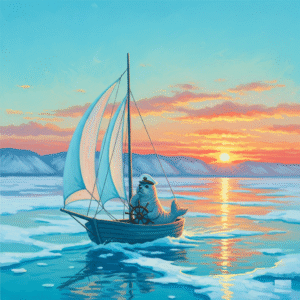
Winter (January-April): Transforms Baikal into a magical frozen wonderland. The lake’s surface freezes into a thick, incredibly clear ice sheet, showcasing “53 types of ice” from white to piercing blue, even cosmically black. When you stand on this transparent ice, with a kilometer of clear water beneath, it’s an awe-inspiring, almost surreal feeling. This is the time for exhilarating activities like ice skating on the world’s largest natural ice rink, dog-sledding, snowmobiling safaris in the taiga, ATV rides directly on the lake, ice diving, and even ice crossing & ice sailing. Explore dazzling ice grottoes filled with crystal chandeliers of purest water and marvel at the unique patterns of coastal splashes. For the truly adventurous, you can even stay in tents located directly on the ice thickness.
Essential Tips for Your Siberian River Adventure
- Gateway City: Irkutsk, often called the “Paris of Siberia,” serves as the primary entry point to the Baikal region, easily accessible by air or the iconic Trans-Siberian Railway. It’s a charming city worth exploring for its 18th- and 19th-century Orthodox architecture.
- Beyond the Lake: Immerse yourself in the rich cultural tapestry surrounding Baikal.
- Buryatia: Discover the homeland of the indigenous Buryat people, delve into Buddhist culture by visiting Datsan monasteries (perhaps even meeting a Lama), and savor traditional Buryat cuisine like pozy (steamed meat dumplings). Explore Old Believer villages, a living testament to pre-Petrine Russia, where you can witness ancient rites, customs, and polyphonic singing, and taste traditional Old Russian dishes.
- Olkhon Island: This “mysterious place of power” is Baikal’s largest island and a spiritual heartland, perfect for exploring Shaman Rock and delving into a civilization older than European, lost amidst green taiga and endless steppes.
- Kyakhta: Near the Mongolian border, this historic “eastern gate of the Great Tea Way” offers a glimpse into a bygone era of merchant wealth and unique Siberian museum collections.
- Arshan: Visit this “Siberian Switzerland” for relaxing radon baths and stunning mountain scenery.
- Buryatia: Discover the homeland of the indigenous Buryat people, delve into Buddhist culture by visiting Datsan monasteries (perhaps even meeting a Lama), and savor traditional Buryat cuisine like pozy (steamed meat dumplings). Explore Old Believer villages, a living testament to pre-Petrine Russia, where you can witness ancient rites, customs, and polyphonic singing, and taste traditional Old Russian dishes.
- Getting Around: From Irkutsk, local minivans (marshrutkas) or the historic Circum-Baikal Railway (a scenic train ride along the lake’s southwestern shore) are excellent ways to explore. For remote access, consider 4x4s, hover boats (in winter), or even helicopters for deep taiga experiences, potentially including guaranteed and safe bear viewing.
- Accommodation: Options range from comfortable tourist bases, hotels, and guesthouses in towns like Listvyanka and Irkutsk to cozy cottages and unique tent stays on the winter ice.
Lake Baikal, with its ancient depths, unparalleled clarity, and the powerful flow of its singular outlet, the Angara River, invites you to discover its magic. Whether you seek thrilling winter adventures on transparent ice or serene summer explorations of its diverse shores, this Siberian jewel offers an unparalleled opportunity to connect deeply with the lifeblood of our planet.
Keep them clean!
As we marvel at the immense beauty and unique hydrology of Lake Baikal and its remarkable Angara River, we’re reminded of the precious and fragile nature of all our planet’s waterways. The intricate balance that allows Baikal to hold such vast, pure freshwater, or for a river like the Angara to forge its singular path, underscores the vital importance of conservation. Every river, lake, and stream connects us, sustaining life and shaping cultures, much like Baikal has shaped Siberia. Let this Siberian jewel inspire us all to champion the protection of freshwater ecosystems globally, ensuring that these irreplaceable liquid legacies continue to flow for generations to come.
F.A.Q.
The Angara River is the sole river that flows out of Lake Baikal. This makes it critically important to the entire Baikal ecosystem, as it empties approximately 60 cubic kilometers of water from the lake annually.
Around 330 rivers flow into Lake Baikal. Some of the most significant include the Selenga River, Barguzin River, Upper Angara River, Sarma River, and Turka River.
Yes, a beautiful Buryat legend tells the tale of the Angara River as the daughter of Baikal. She defied her father to flow towards her beloved Yenisei River, with the “Shaman Rock” symbolizing Baikal’s attempt to stop her.
As the Angara River flows out of Baikal, it eventually joins the mighty Yenisei River. The blog post also mentions the Lower Tunguska River and Stony Tunguska River as tributaries of the Yenisei, originating from the same range the Angara flows through.
As the Angara River carves through the Angara Range, its tributaries converge to create small waterfalls and rapids, particularly in its southern and central areas.