Search
Close this search box.
Search
Close this search box.

You Won’t BELIEVE the “Ghost River” Hiding Under Baltimore!

Beneath the concrete and asphalt of Baltimore, a hidden history whispers. Join us as we explore how artist Bruce Willen's "Ghost Rivers" project is bringing a long-buried stream back to life, revealing its ecological importance and inspiring a new vision for urban waterways.

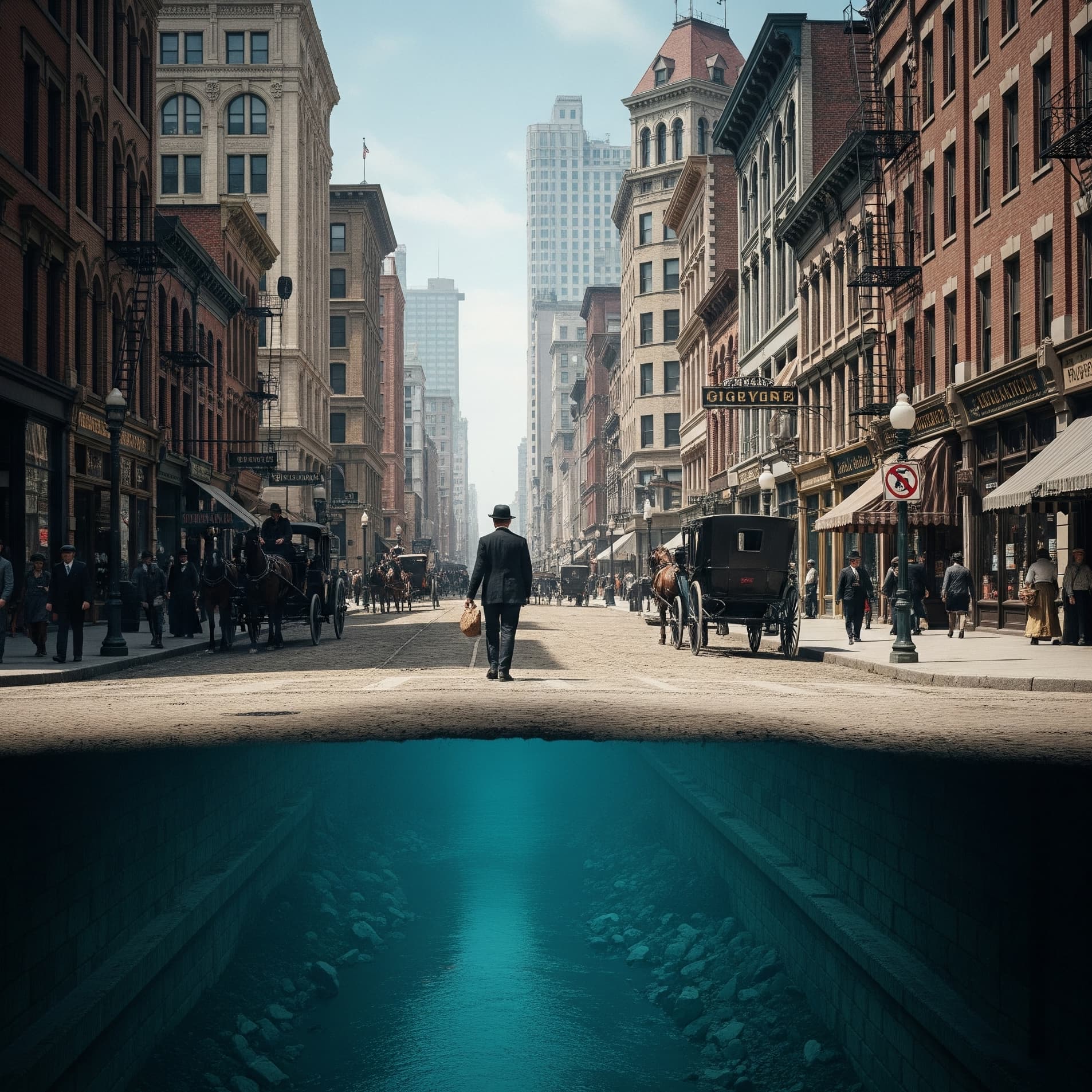
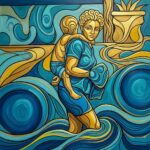
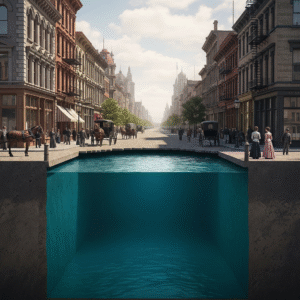
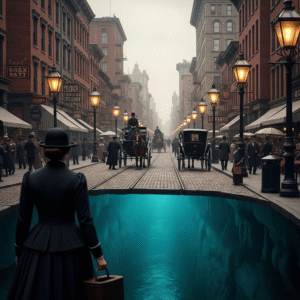
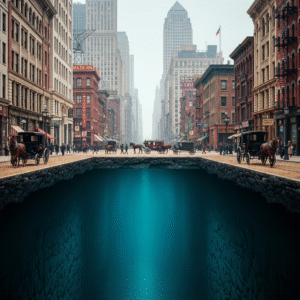
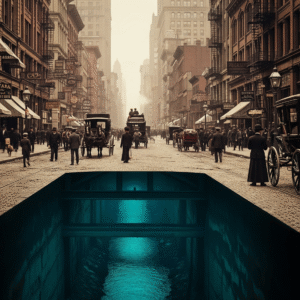
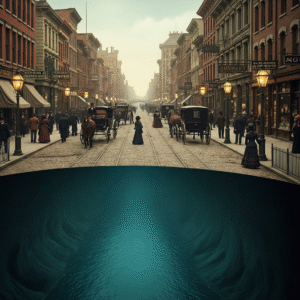
Love this cover artwork? Check out the 5 alternatives above the comment section below.

The Hidden Flow: Unveiling Baltimore's Ghost Rivers

Beneath the concrete and asphalt of countless bustling cities, a vibrant river once flowed. This isn’t a forgotten fantasy; it’s the stark reality in many urban centers, including Baltimore. For over a century, dozens of natural streams, once vital arteries of the landscape, have been confined to underground tunnels, channeled into storm sewers, and largely forgotten. We call these the “ghost rivers” – present but unseen, their murmuring currents occasionally echoing from storm drains, a subtle reminder of what lies beneath.

One such ghost is Sumwalt Run, a creek that once meandered through what are now Baltimore’s Remington and Charles Village neighborhoods. As the city expanded, this verdant waterway was absorbed into the urban fabric, buried under streets, buildings, and parks. But thanks to the innovative vision of multidisciplinary artist Bruce Willen, Sumwalt Run is re-emerging, not literally, but in the public consciousness, inviting us to rediscover a crucial piece of Baltimore’s natural and social history.

Ghost River Project River Mixer (3)
Tracing The Spectral Flow In Vibrant Blue: The Outline Of Bruce Willen's "Ghost Rivers" Visually Maps The Long-Buried Sumwalt Run Across Baltimore.

Bruce Willen's Vision: Art as a River's Voice

Bruce Willen, founder of Public Mechanics, has spearheaded the “Ghost Rivers” project, a remarkable public art installation and walking tour spanning 1.5 miles. His inspiration sparked from a simple yet profound observation: the faint sounds of water emanating from storm drains during a pandemic-era walk, coupled with the discovery of old maps depicting a creek where none seemed to exist. This ignited a curiosity that blossomed into a powerful artistic endeavor.

The project visually traces the lost stream’s path with wavy, light-blue thermoplastic lines that trickle across streets, sidewalks, and even up building walls. These striking visual cues act as a symbolic re-surfacing of Sumwalt Run, making its hidden presence undeniable. Accompanying these artistic “waterlines” are interpretive signs that provide rich historical context, detailing the creek’s natural ecology, the reasons for its burial in the early 1900s, and how it shaped the communities that grew around it. Willen describes it as creating a “monument to a lost landscape,” a unique approach to memorializing nature’s past in an urban environment.

Unearth America's Hidden River Stories: "Mark Twain Blend" River Water Pendant Necklace

The "Ghost Rivers" project in Baltimore unearths powerful stories, reminding us that every waterway, seen or unseen, holds a piece of our history. If you are captivated by the enduring spirit of American rivers and the narratives they carry—from the mighty Mississippi that Mark Twain immortalized to the hidden streams beneath our cities—our handcrafted "Mark Twain Blend" River Water Pendant Necklace offers a tangible echo of these vital currents. Each pendant holds a unique blend of authentic river waters, a beautiful tribute to the rich heritage and profound impact of our nation's flows. Wear its spirit and let it inspire your own commitment to understanding and preserving these invaluable natural treasures.
On Sale
Ghost River Project River Mixer (2)
A River Runs Beneath It In Vibrant Blue: The Painted Outline Of Sumwalt Run In "Ghost Rivers" Offers A Striking Visual Contrast With Baltimore's Urban Landscape, Revealing A Forgotten Natural History

The Ecological Echoes: Why Ghost Rivers Matter

The “Ghost Rivers” project is far more than a historical art installation; it’s a vital environmental statement. When natural streams are encased in concrete tunnels, they lose their inherent ecological functions. Unfiltered stormwater runoff, laden with pollutants, rushes directly into these buried channels, bypassing the natural filtration provided by plants, soil, and rocks in a healthy stream valley. This accelerated flow and lack of filtration have significant negative impacts on larger waterways, eventually contributing to the ecological challenges faced by the Chesapeake Bay.

Willen’s work highlights this critical issue, emphasizing that the consequences of burying these waterways are still felt today. While literally unearthing Sumwalt Run is impractical due to extensive development, the project fosters a crucial dialogue around “daylighting” – the practice of uncovering buried waterways. This concept, while challenging for Sumwalt Run, holds immense potential for other buried streams, such as portions of the Jones Falls, prompting discussions about future urban planning that prioritizes environmental health and integrates natural systems.

Ghost River Project River Mixer (1)
Artist Bruce Willen At The Opening Of The "Ghost Rivers" Project In Baltimore.

Community Flow: Shaping the Narrative

A key element of “Ghost Rivers” success lies in its deep roots within the community. Bruce Willen didn’t just impose his artistic vision; he actively engaged with hundreds of local residents. Through interviews, he gathered local histories, anecdotes, and perspectives that directly shaped the interpretive text found on the project’s signs. This collaborative approach ensures the art resonates with those who live and work in Remington and Charles Village, making it truly their story.

The project delves into the social history of the neighborhoods, touching on themes like migration, industrial development, and the changing demographics. By intertwining the story of the river with the story of its people, “Ghost Rivers” transforms into a multi-layered narrative that enriches understanding of both the natural and human ecosystems. It serves as a testament to how public art can not only beautify a space but also foster a deeper sense of connection and shared heritage within a community.

Ghost River Project River Mixer (4)
A Precisely Cut "Ghost Rivers" Sign Perfectly Aligns With The Distant, Vibrant Blue Outline Of The Long-Buried Sumwalt Run In Baltimore.

Beyond Baltimore: Global Art Championing Rivers

The “Ghost Rivers” project in Baltimore stands as a powerful example of how art can champion rivers and their vital role in our world. This creative advocacy is not unique to Baltimore; artists globally are using their platforms to bring attention to waterways and inspire environmental stewardship. Here are a few notable examples of environmental art that specifically celebrate and advocate for rivers:

  • “The Rising Tide” by Jason deCaires Taylor (River Thames, UK): This striking series of four underwater sculptures, depicting figures on horseback, appears and disappears with the tide. It serves as a powerful visual metaphor for climate change and rising sea levels, directly engaging with the river’s changing environment.

  • Olafur Eliasson’s “Riverbed” (Denmark): While not exclusively about real-world rivers, Eliasson’s monumental installation recreated a rocky riverbed, complete with flowing water, within the Louisiana Museum of Modern Art. It powerfully invites viewers to connect with the raw forces of nature and reflect on the value and fragility of real landscapes.

  • “The Parting of The Plastic Sea” by Benjamin Von Wong (Vietnam): This powerful installation was made from over 168,000 discarded plastic straws collected in Vietnam. It highlights the devastating impact of plastic pollution on aquatic environments, including rivers that carry waste to the sea.

  • Cheonggyecheon Stream Restoration (Seoul, South Korea): This is a globally renowned example of “daylighting” a major urban stream. While a large-scale urban planning project, its success includes integrated public art and cultural spaces along the restored waterway, inspiring other cities.

  • “The Wild Mile” (Chicago, USA): This ongoing project on the Chicago River is creating the world’s first fully floating eco-park. It transforms a man-made channel into a public park, botanical garden, and wildlife habitat, showcasing how urban rivers can be revitalized through innovative design.

These projects, much like “Ghost Rivers,” demonstrate the immense power of art to inform, provoke, and inspire action, reminding us that rivers, in all their forms, continue to flow through the heart of our planet and our communities.

Keep them clean!

he “Ghost Rivers” project is a powerful reminder that our impact on rivers, seen or unseen, is profound. Sumwalt Run’s story underscores the environmental cost of buried waterways, from increased pollution runoff to the loss of natural filtration. This project isn’t just about history; it’s a call to action. Let the hidden whispers of Sumwalt Run inspire us to be better stewards of all our planet’s flows, ensuring clean, healthy rivers for generations to come.

F.A.Q.

The “Ghost Rivers” project is a public art installation and walking tour in Baltimore created by artist Bruce Willen. It visually traces the path of a buried stream called Sumwalt Run, revealing hidden natural and social histories.

Sumwalt Run is a natural stream in Baltimore that was buried over a century ago to allow for urban development. It now flows through underground culverts and storm sewers beneath neighborhoods like Remington and Charles Village.

The project uses wavy, vibrant blue lines painted on streets and sidewalks to visually map the underground path of Sumwalt Run. It also includes interpretive signs providing historical and ecological context.

Streams were buried to create more land for urban expansion, development of streets and buildings, and sometimes for public health reasons as urban waterways became polluted.

When rivers are buried in concrete tunnels, they lose their natural ability to filter pollutants. Stormwater runoff, unchecked by natural processes, rushes directly into larger waterways, contributing to ecological challenges.

Additional resources

Related Content

Don't miss a drop.

Sign up for new river alerts! We're continually expanding our collection with amazing waterways from around the globe. If you're searching for a specific river to enhance your craft, spiritual or research practices, subscribe to stay informed.
subscribe

Editor's note

This blog post uses publicly available information from various sources, synthesized with the help of AI, as a starting point for exploring the world of rivers. Our editors review the content for accuracy, though we encourage readers to verify information intended for primary source use. We strive to use public domain, licensed, or AI-generated images; due to the nature of online sharing, individual image sources are generally not credited. Please contact us regarding any copyright concerns.

Featured Friends

Urban Rivers.

Urban Rivers is an innovative non-profit organization dedicated to revitalizing urban waterways by transforming them into vibrant wildlife sanctuaries. Recognizing the pervasive issue of metal seawalls replacing natural riverbanks in major cities, Urban Rivers constructs artificial floating gardens filled with native wetland plants, effectively reintroducing crucial habitat for local wildlife within existing industrial infrastructure. Beyond ecological restoration, the organization is deeply committed to a critical social mission: creating accessible and inclusive natural spaces for people of all backgrounds, particularly targeting historically marginalized communities disproportionately affected by environmental degradation, through the development of public walkways and a variety of free, welcoming programs.
featured

our river collection

Crossword Puzzle

Collection Map

Let's Celebrate.

Travel the world, one river at a time. Explore our map and follow us as we collect precious rivers. Become part of the story by owning your own drops of history.
map

River Clips

Collection Videos.

Trace the origins of our extraordinary river water collection. Watch captivating video clips that capture the breathtaking birthplaces of these rivers.
videos

Be a River Guardian

Buyer Rivers

recent posts

News

What is a ‘Turbocharged Water Cycle’ and How Did it Turn Jamaica’s Black River into a Weapon?

The gentle giant had turned into a weapon. For centuries, the Black River in Jamaica has been a cultural icon, its tannin-stained waters host to endangered crocodiles and historic trade. But when Hurricane Melissa unleashed a “Turbocharged Water Cycle,” the river’s polite flow was replaced by a geological wrecking ball. Read how a changing climate is permanently changing Jamaica’s geography and forcing us to redefine what a river can do.

Read More »
Science

7 Essential Differences: River Tributary vs. Distributary Explained

Every great river has a story—and a complex network of veins. We dive deep into the fascinating, yet opposite, roles played by tributaries and distributaries. Tributaries are the powerful collectors that build a river’s strength, often starting in rugged headwaters perfect for outdoor adventure. Distributaries, conversely, are the great dividers that create fertile, culturally rich river deltas. Understanding the distinction between these two key geographical features is essential for appreciating the flow of history, the diversity of nature, and the critical importance of global river conservation.

Read More »
News

Amazon River Mouth: Why Oil Drilling Threatens All

The battle for the Amazon’s future is playing out at its mouth. This vital ecosystem—home to Indigenous and Quilombola communities, a massive coral reef, and unique mangroves—is the target of Brazil’s state-owned oil company, Petrobras. The pursuit of a new multi-billion-barrel oil frontier clashes directly with the health of the world’s most critical river, testing Brazil’s climate promises and risking catastrophic, widespread environmental destruction.

Read More »
History

The Saraswati River: How Tectonics and Drought Erased the Lifeblood of the Indus Civilization

Forget Atlantis. Before the Pyramids, before Rome, one of the world’s mightiest empires—the ancestor of modern India—was powered by a colossal, holy river called the Saraswati (Pronounced: Suh-RUH-swah-tee). Then, it simply disappeared. Vanished. What force of nature was powerful enough to erase a river more revered than the Ganges? The answer is a stunning blend of ancient scripture, desert whispers, and modern satellite science. Get ready to play historical detective.

Read More »
News

Jane Goodall’s Passing: What the River Teaches Us About Her Urgent Conservation Legacy

When Jane Goodall first entered the rainforests of Gombe, she saw more than trees and chimps; she saw an entire, interconnected system. That same biological truth is mirrored perfectly by our planet’s rivers. They are the blue arteries of the Earth, delivering life from the mountains to the sea. In honor of Goodall’s enduring legacy, we explore how the principles of a healthy river—interconnectedness, resilience, and vitality—are the very principles she spent her lifetime championing, and why her passing serves as an urgent reminder of our duty to protect every drop.

Read More »

Alternative Covers

We had multiple art options for this post’s cover, but only one could make the cut. Here are 5 runner-ups. Did we choose the right one?

Leave a Reply

Your email address will not be published. Required fields are marked *

For security, use of Google's reCAPTCHA service is required which is subject to the Google Privacy Policy and Terms of Use.