logo-b81fc6af2faedb728fbd5fa5eeed23730c5b8be653318097907f3f0a5adbc5a6
Click for a Unique Window into the Untouched Amazon Waterway: Watch Live Now! (Courtesy of Junglekeepers)

The River Mixer’s Guide to River Figures: Defining the Explorers, Protectors, Challengers, Storytellers, and Locals

Most people see the river as a backdrop, but to a River Mixer, it’s a physical system of moving parts. Whether it’s a navigator pushing a hull into an unmapped tributary or a protector anchoring a trash boom against the current, every person on the water fits into a specific role. This is a breakdown of the five archetypes shaping our waterways—the explorers, protectors, and locals who know the river better than anyone else.
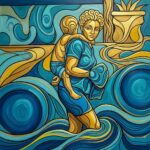
Love this cover artwork? Check out the 5 alternatives above the comment section below.

Table of Contents

Part I: The Explorers

This group is for those who move into unmapped areas. Their purpose is discovery and the completion of first-time journeys. They are defined by finding the route and reaching the destination before a map exists. They are the scouts of the river system, whether recording the depth of a channel with a weighted lead line or a digital sonar pulse. Their work involves heavy reconnaissance, portaging hulls over raw stone, and navigating through unknown reaches where the only reliable guide is the physical lean of the land.

Profiled Figures

Edwin R. Heath was an American physician and explorer who played a critical role in the cartography of South American waterways. During the late 19th century, he successfully mapped the Beni River in Bolivia, proving it was a major tributary of the Madeira. His expedition was vital for international trade, as it finally provided a reliable navigational guide for a previously mysterious stretch of the Amazonian drainage system.

Read the full story: Mapping the Beni: Edwin R. Heath

John Wesley Powell was a geologist and veteran who led the first government-sponsored expedition through the Grand Canyon via the Colorado River in 1869. His harrowing journey through white-water rapids and towering stone walls provided the first scientific descriptions of the canyon’s geology. Beyond his bravery on the water, Powell became a visionary voice for water management, arguing that the development of the American West should be dictated by the natural boundaries of river basins.

Read the full story: John Wesley Powell: The Colorado Prophet

Percy Harrison Fawcett was a British geographer and artillery officer whose expeditions were focused on mapping the headwaters of the Amazon. He spent years surveying the complex networks of the Xingu River and other tributaries along the border of Brazil and Bolivia. Fawcett is most famous for his obsession with finding a lost civilization he called “Z,” a quest that eventually led to his disappearance in the dense river-fed jungles of the Mato Grosso.

Read the full story: The Lost City of Z: Percy Fawcett

Alexander von Humboldt was a Prussian polymath who revolutionized the study of physical geography during his five-year journey through the Americas. One of his most significant hydrological achievements was confirming the existence of the Casiquiare canal, a natural waterway that connects the Orinoco River and the Amazon River systems. This discovery fundamentally changed the European understanding of how continental river systems could interact and flow across different basins.

Read the full story: Humboldt and the Casiquiare Connection

Meriwether Lewis and William Clark led the Corps of Discovery on an epic transcontinental journey to find a water route to the Pacific. Their expedition relied almost entirely on the Missouri River and the Columbia River, mapping the vast interior of the North American continent for the first time. They documented hundreds of new species and established the first American presence along these vital western arteries.

Read the full story: Lewis & Clark: Tracking the Missouri

Robert Bell was a legendary Canadian geologist who, in 1895, proposed the existence of a continent-spanning “lost Amazon” known as the Paleo-Bell. This colossal ancient river system once flowed from the Rockies to the Labrador Sea, carrying more water than any river on the continent today. Bell’s visionary fieldwork laid the foundation for modern discoveries of North America’s dynamic geological past and its vanished water giants.

Read the full story: The Paleo-Bell: North America’s Lost Amazon River

Sidi Mubarak Bombay wasn’t just a guide; he was the iron spine of every expedition that dared to enter the African interior. While European names were etched into the history books, it was Bombay who read the currents, brokered the peace, and kept the “Great Explorers” breathing. He was a man stolen from his home on the Ruvuma who returned to master the continent’s most treacherous lifelines, proving that the maps were never drawn by the men who held the pens, but by the pilot who held the oars.

Read the full story: Sidi Mubarak Bombay: 10 Facts About the River King Who Led a Lost John Hanning Speke to the Source of the Nile – River Mixer™

Coming Soon Figures

Part II: The Protectors

This group is for those who work to preserve the water. Their purpose is restoration and defense. They are defined by their efforts to improve the health of the river and stop activities that would damage it. These figures are found anchoring trash booms against the current, hauling rusted steel from the riverbed, or monitoring the clarity of the water after a storm. They act as the river’s immune system, reinforcing banks with timber or stone and maintaining the integrity of the floodplain against encroachment.

Profiled Figures

Paul Rosolie is a naturalist and author who has spent much of his career deep within the Peruvian Amazon. Through his organization, Junglekeepers, he works to protect the Madre de Dios River basin by employing local rangers to patrol and preserve critical rainforest corridors. He highlights the urgent need to preserve the Western Amazon, focusing on the intricate relationship between the river’s health and the survival of the forest’s apex predators.

Read the full story: Paul Rosolie and the Junglekeepers

Gary Bencheghib is an environmental activist known for his relentless fight against river pollution in Indonesia. Through his organization, Sungai Watch, he collects massive amounts of waste from the Citarum and other waterways to transform it into recycled furniture and building materials. By upcycling trash into high-quality chairs and tables, he demonstrates a circular economy model that prevents plastic from ever reaching the ocean.

Read the full story: Gary Bencheghib: From Trash to Furniture

While primarily known for her work with primates, Jane Goodall has become a staunch advocate for the protection of the Congo River basin. She recognizes that the survival of the chimpanzees depends entirely on the health of the massive watershed that defines their habitat. Her global environmental work emphasizes how local river health is the foundation for both human communities and the wildlife that resides within the tropical rainforests of Africa.

Read the full story: Jane Goodall and the Congo Basin

Andrés Ruzo is a geothermal scientist who brought the Boiling River of the Amazon, known locally as the Shanay-timpishka, to the world’s attention. Through the Boiling River Project, he works to protect this unique thermal tributary from the threats of logging and cattle ranching. Ruzo’s research explores how this massive non-volcanic geothermal system exists, seeking to preserve both the physical site and its cultural significance to local communities.

Read the full story: Andrés Ruzo and the Boiling River Project

Coming Soon Figures

Part III: The Challengers

This group is for those who use the river for competition. Their purpose is speed, endurance, and physical performance. They are defined by the pursuit of records, trophies, or victories against the water and other people. This includes elite athletes like whitewater kayakers who must read the kinetic energy of a heavy rapid, as well as dedicated anglers who test their skill against the river’s inhabitants. For the Challenger, the water is a trial of resistance, requiring mastery over the weight of an oar, the tension of a line, or the hydrodynamics of a hull.

Profiled Figures

Coming Soon Figures

Part IV: The Storytellers

This group is for those who create a record of the river. Their purpose is documentation and history. They are defined by the physical archives they leave behind that show exactly what the river looked like in their time. This group includes the writers, painters, and photographers who translate movement into a permanent medium. Whether they are using ink-pots and vellum or modern camera lenses to capture a canyon, they ensure the river’s past is preserved in a ledger before the next season alters the landscape.

Profiled Figures

Robert Szucs is a digital cartographer and the founder of Grasshopper Geography, famous for creating vibrant, color-coded maps of the world’s river basins. His work visualizes the veins of the planet, showing how every tiny stream feeds into major arteries like the Mississippi, Nile, or Danube. By turning hydrological data into art, he helps people visualize the interconnected nature of watersheds and the vast reach of river systems across continents.

Read the full story: The Art of Rivers: Robert Szucs

Israel Derrick Apeti, known as Enil Art, is a Ghanaian artist who uses his talent to expose the environmental devastation caused by illegal mining. In a powerful act of protest, he visited the heavily polluted Pra River and discovered the water was so thick with toxins and silt that he could use it directly as paint. By creating portraits with these “tears” of the river, he forces viewers to confront the reality of a waterway that was once a source of life but has been turned into a toxic yellow stream.

Read the full story: Enil Art: Painting with the Pra River

Langston Hughes was a central figure of the Harlem Renaissance whose poetry utilized water imagery to connect history and heritage. In his poem, “The Negro Speaks of Rivers,” he traces the journey of his people along the banks of the Euphrates, Congo, Nile, and Mississippi. By linking the soul to the deep flow of these ancient waterways, he established a powerful metaphor for the endurance and depth of the human spirit.

Read the full story: Langston Hughes: The Soul of Rivers

Tim Palmer is an author and photographer who has spent decades documenting the beauty and fragility of North American rivers. He has written extensively about the Wild and Scenic Rivers Act and the importance of keeping certain waterways free-flowing and undammed. Through his photography, he captures the life-giving essence of rivers and argues for their protection as a vital part of the continent’s ecological heritage.

Read the full story: Tim Palmer: A Wild River Lens

Bruce Willen is a multidisciplinary artist who founded the “Ghost Rivers” project to reveal the hidden history of Baltimore’s buried waterways. By tracing the path of the long-lost Sumwalt Run with vibrant blue waterlines across the city pavement, he brings a forgotten ecosystem back into the public consciousness. His work serves as a “monument to a lost landscape,” sparking vital conversations about urban ecology and the potential for daylighting buried streams.

Read the full story: Bruce Willen and Baltimore’s Ghost Rivers

Christian Cave is an explorer and educator behind “Caveman Wildlife” who led a specialized expedition into the Peruvian Amazon. Navigating the Ucayali and Marañón river systems, he documented the legendary green anaconda—known locally as the Yacumama or “Mother of the Water.” Through his documentary film, he works to bridge the gap between indigenous river myths and biological conservation, advocating for the protection of the apex predators that rule these slow-moving waterways.

Read the full story: Christian Cave’s Peruvian River Expedition

Coming Soon Figures:

Part V: The Locals

This group is for those with specialized knowledge of the riverbed. Their purpose is mastery of the hidden. This includes indigenous leaders, master guides, and anyone defined by their ability to read the water to find the path or locate objects out of sight. Their goal is knowing the riverbed. These experts—from guides navigating deep channels to scavengers pulling relics from the silt—can read surface ripples to map the underwater topography. They possess a mental map of the unseen, identifying paths and submerged objects that remain invisible to the untrained eye.

Profiled Figures

Jordi Miguel is a seasoned naturalist and ichthyology expert who has dedicated over two decades to exploring the aquatic ecosystems of the Amazon. Operating the traditional vessels “Lo Peix” and “Acqua Amazon,” he leads immersive expeditions through the dark, acidic waters of the Rio Negro and the Anavilhanas Archipelago. His deep knowledge of fish and river rhythms allows travelers to understand the unique biodiversity of the “black water” environment and the surreal phenomenon of the Meeting of the Waters.

Dallas is the creator of the popular channel Man + River, where he dives into river depths to recover lost items and historical artifacts. Based out of Texas, he explores the murky floors of waterways like the Comal and Guadalupe, returning lost phones, wallets, and rings to their owners. His work blends underwater exploration with a message of environmental stewardship, reminding us that rivers are repositories of both human stories and modern waste.

Read the full story: Dallas and the Man + River Dives

Coming Soon Figures

Conclusion

The river is a high-resistance environment that demands a specific physical response, and these five figures represent the most effective methods of interaction currently in the field. This guide remains an active ledger, documenting the gear, mechanics, and physical transit of those working the water while tracking the names we have yet to analyze. As we continue to move names from our Coming Soon Figures list into a full technical profile, the objective remains the same: to build a comprehensive map of how we move, protect, and record the systems that define our landscape.

Keep them clean!

Every role in this guide—from the Explorer to the Local—relies on the physical health of the water to function. You don’t need a custom hull or a specialized machete to participate in the river’s story; the most critical interaction you can have is maintaining the system’s integrity. By adopting a “Clean River” protocol and removing debris from the riparian zone, you move from being a passive observer to an active participant in the landscape. We encourage every reader to look at these five roles and decide how they will interface with their local waterway. Whether you are Profiled in a future update or working quietly on your own bank, the goal remains the same: keep the water moving and the system clean.

F.A.Q.

There is no rigid formula. As we read, research, and interact with the River Mixer community, we come across people whose work or gear catches our eye. If their interaction with the water is unique or impactful, they get added to the list. It’s a natural process of discovery rather than a strict set of criteria.

Time is the biggest factor. We have a growing list of people we want to cover, but a deep-dive technical profile takes effort. We use the Coming Soon section as a public “to-do list”—it’s our commitment to you that we will get to these figures and write about them as soon as possible.

While a Local may occasionally engage in exploration, we categorize figures by their primary, sustained interaction. We identify the core of their work—whether it’s seasonal intuition or high-resistance transit—and profile them where their impact is most measurable.

The distinction is about the roots. A Local is defined by their daily, functional integration with the water’s cycles. While an Explorer might be passing through or a scientist might be visiting for data, a Local lives with the river’s rhythm. Their knowledge is built on years of seeing the riparian (ry-pair-ee-uhn) shifts from their own back door.

We aim to blog once a week, but we don’t always profile a specific figure in every post. We update this ledger whenever possible. When a new analysis is ready, a name moves from the “To-Do” list into a full profile. It’s an ongoing project that grows as we find the time to do the research.

Beyond the banks
Ganges River Water Pendant: The Sacred Lifeline
The Ganges River (Ganga) is India's most sacred waterway, symbolizing universal life, purity, and the continuous flow of civilization. Our post highlights the flood vulnerability of Sri Lanka's Mahaweli and Kelani rivers, exposing the global cost of neglecting these vital lifelines. This pendant represents the spiritual commitment required of us all. Wear it as a daily vow to the principle of stewardship—a reminder that protecting the sacred flow of all great rivers is essential for civilization. Protect the flow that nurtures humanity.
On Sale
Related Content
Don't miss a drop.
Sign up for new river alerts! We're continually expanding our collection with amazing waterways from around the globe. If you're searching for a specific river to enhance your craft, spiritual or research practices, subscribe to stay informed.
subscribe
Editor's note

This blog post uses publicly available information from various sources, synthesized with the help of AI, as a starting point for exploring the world of rivers. Our editors review the content for accuracy, though we encourage readers to verify information intended for primary source use. We strive to use public domain, licensed, or AI-generated images; due to the nature of online sharing, individual image sources are generally not credited. Please contact us regarding any copyright concerns.

Featured Friends
Waterkeeper Alliance.
The Waterkeeper Alliance is the world’s largest "neighborhood watch" for our waterways, uniting over 300 local groups to ensure every river is drinkable, fishable, and swimmable. These modern-day guardians mirror your Pioneers by physically patrolling their home territories, monitoring for illegal pollution, and acting as the "immune system" for the planet's lifeblood. By combining the scouting instincts of The Explorers with the legal grit of The Protectors, they empower local communities to hold polluters accountable and defend the health of their own riverbeds.
featured
our river collection
Crossword Puzzle

Collection Map
Let's Celebrate.
Travel the world, one river at a time. Explore our map and follow us as we collect precious rivers. Become part of the story by owning your own drops of history.
map
River Clips
Collection Videos.
Trace the origins of our extraordinary river water collection. Watch captivating video clips that capture the breathtaking birthplaces of these rivers.
videos
Be a River Guardian
recent posts
Sound
Salween River Song: “Silk Thread” – Lyrics & The Sonified Sound of the Last Free Giant

The latest release from Basin Beats, produced by BasinScore™, presents the sound of the Salween—a resilient journey through the “Grand Canyon of the East” and the struggle of a river fighting to run free. “Silk Thread” sonifies the tension between the sacred celestial stitches of the Nu people and the heavy sediment of border mines, blending a driving 126 BPM deep house groove with the reality of a B Health Score.

Read More »
Culture
Water No Get Enemy: How Fela Kuti Predicted the Global War for the River

Fela Kuti’s music operates with the physical weight of a high-volume discharge. To understand “Water No Get Enemy,” we must see the river as essential infrastructure. Just as a current carves its channel through the landscape, Fela’s 4/4 drum patterns create a relentless, mechanical force. In 2026, we are finally realizing that we cannot legislate against the physics of water; the flow is indifferent to human ego.

Read More »
Outdoors
A BioTribute™ for Tim Palmer: Scoring the Water Witness

River Mixer presents our second BioTribute™ release, featuring Tim Palmer. His career is defined by an immersive, ground-level look at the earth’s morphology—from the iron-scented silt of the 1972 Susquehanna inundation to the mapping of the “Wild and Scenic” line. This release by Basin Beats™ documents his transition from a draughtsman to a nomadic Water Witness, tracking the kinetic power of the current across three hundred thousand miles of field research. We are continuing this series by archiving a life spent documenting the topography and the physical record of the water.

Read More »
Sound
Brahmaputra River Song: “Father Brahma” – Lyrics & The Sonified Sound of the Son of Brahma

The latest release from Basin Beats, produced by BasinScore™, presents the sound of the Brahmaputra—a heavy, braided journey through the silt of the Himalayan giant. “Father Brahma” sonifies the tension between the ancient “Peacock Island” lore and the aggressive rise of industrial sediment, blending “Glacier Turquoise” Tibetan flutes with the distorted reality of a D+ Health Score.

Read More »
Alternative Covers

We had multiple art options for this post’s cover, but only one could make the cut. Here are 5 runner-ups. Did we choose the right one?

Leave a Reply

Your email address will not be published. Required fields are marked *

For security, use of Google's reCAPTCHA service is required which is subject to the Google Privacy Policy and Terms of Use.