Who is Edwin R. Heath?
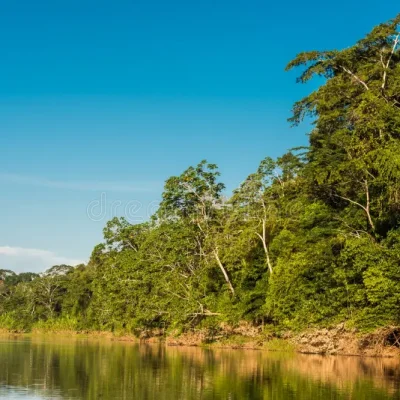
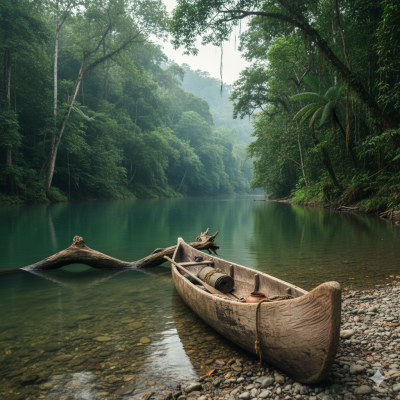
In the late 19th century, the Beni River was a void on the map that swallowed explorers whole. While many professional geographers turned back in fear, Edwin Ruthven Heath, born July 13, 1839, and passing away on October 27, 1932, approached the challenge with the precision of a surgeon. A physician from Kansas, Heath was originally drawn to South America to work as a doctor for the grueling railroad projects. However, his fascination with the “Unknown Beni” soon took over. In 1880, armed with little more than a medical bag, a sextant, and a legendary amount of grit, he set off to do what the great Professor James Orton had died trying to achieve: navigate the entire length of the Beni and prove where it led.
Before the River: A Surgeon Forged in Conflict
Before he ever stepped into a canoe, Heath was a man defined by medicine and duty. Born in Wisconsin and educated in New York, his first real test came during the American Civil War. He served as an Assistant Surgeon, a role that forced him to perform complex procedures under the most primitive conditions. This early exposure to trauma and tropical disease in the American South gave him the psychological “armor” needed for the Amazon. By the time he moved to South America in the 1870s to work on the Madeira-Mamoré Railway, he was already a veteran of hardship, treating thousands of workers for yellow fever and malaria long before he ever turned his attention to mapping.
Navigating the Golden Age of the Rubber Boom
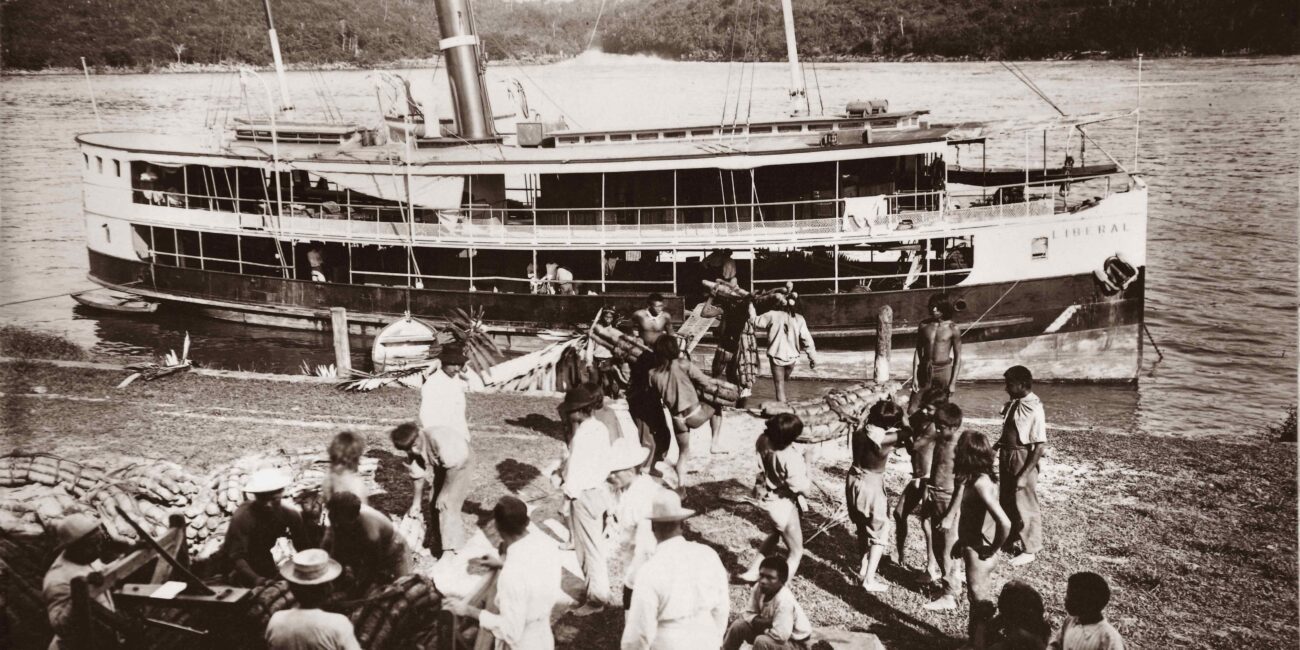
To understand the stakes of Heath’s journey, one must understand the “Rubber Fever” that gripped the world. In the 1880s, the industrial revolution was starving for natural rubber to create tires, gaskets, and insulation. The Amazon basin held the world’s only supply of the Hevea brasiliensis (hee-VEE-uh bruh-ZIL-ee-EN-sis) tree. Rivers were the only “highways” through this dense green wall. Heath’s successful 1,200-mile paddle was a massive economic catalyst. By proving that the Beni connected seamlessly to the Madeira River, he unlocked a hidden corridor that allowed rubber to be shipped directly from the heart of the Bolivian jungle to European markets.
The Original Stewards: The Ese’ Ejja and the Sonene
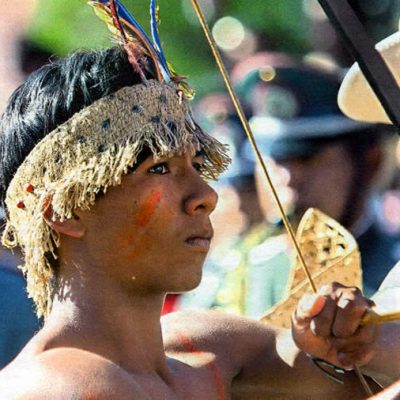
While history books often frame Heath as the man who “put the river on the map,” we must recognize the Ese’ Ejja (EH-seh EH-ha) people, the true “People of the River.” For millennia, they have lived along the banks of what they call the Sonene (so-NEH-neh). To the Ese’ Ejja, the river is not just a body of water; it is a spiritual entity and a living ancestor. Their cosmology is deeply rooted in the water; they believe their ancestors emerged from the river itself, making their stewardship of the Sonene a sacred duty rather than just a matter of survival.
The Ese’ Ejja were master navigators long before Westerners arrived, but the “discovery” by Heath brought the Rubber Boom to their doorstep with devastating consequences. Powerful rubber barons like Nicolás Suárez used Heath’s maps to claim the land. This led to a period of “reducciones,” where indigenous people were often forced into labor or violently displaced from their ancestral fishing grounds. Despite this history of upheaval, the Ese’ Ejja remain a resilient culture today, continuing to fish the Sonene and fighting for the legal recognition of their territory.
The Formal Process of Naming a River: Two Worlds Compared
Why do we call it the Heath River instead of the Sonene on international maps? The process of naming a river—known as Potamonymy (pot-uh-MON-uh-mee)—differs wildly depending on whether the namers are looking at “home” or looking “abroad.”
The Western “Explorer” Approach: Historically, naming rivers after individuals was a tool of ego and empire used primarily on foreign soil. Explorers who produced the first Western “scientific” survey usually earned the naming rights. If a body like the Royal Geographical Society accepted the map, the name—often a patron, a politician, or the explorer themselves—became the global standard. Today, the Board on Geographic Names manages this with strict rules, often requiring a person to be deceased for years before a river can bear their name.
The Global “Home” Approach: It is a mistake to think Westerners are naturally different from indigenous folks in how they relate to their environment. Back in Europe, the oldest river names actually follow the exact same toponymic (top-uh-NIM-ik) or descriptive logic as the Ese’ Ejja. For example, the River Rhine comes from a word meaning “to flow,” and the River Thames likely means “dark” or “cloudy.” When people live on a river for centuries, they name it for what it is—its behavior, its color, or its resources—rather than who “found” it.
The Indigenous Approach: For the Ese’ Ejja, the name Sonene is a reflection of the river’s sound and spirit. It serves as a functional map and a cultural anchor. This descriptive naming is the universal human standard; it was only during the brief “Age of Discovery” that rivers began to be treated as monuments to men like Edwin R. Heath.
Legacies Written in Water
Edwin R. Heath is part of an elite group of figures whose identities have been permanently merged with the earth’s hydrography. Here are a few famous examples of rivers named after individuals:
The Hudson River – Named for Henry Hudson, who “found” the river in 1609.
The Mackenzie River – Named for Alexander Mackenzie, who traveled the 1,000-mile length of Canada’s longest river in 1789.
The Roosevelt and Kermit Rivers – Formerly known as the “River of Doubt,” the Roosevelt River was renamed for President Theodore Roosevelt after his 1913 expedition. His son, Kermit Roosevelt, has a smaller tributary named the Kermit River for his bravery during the trip.
The Fraser River – Named for Simon Fraser, whose 1808 descent opened British Columbia to trade.
The Thompson River – Named by Simon Fraser to honor his friend David Thompson.
Later Life: The Scholar and the Diplomat
After his harrowing years in the jungle, Heath did not simply fade away. He returned to the United States and settled in Kansas City, where he became a prominent physician and a respected member of the Royal Geographical Society. He didn’t just stay in the exam room, though; he served as the Consul General for Bolivia and Nicaragua, using his deep knowledge of South American river systems to bridge the gap between North and South American relations. He was a frequent lecturer, often bringing his original hand-drawn maps to show students that the world was much larger than it appeared in textbooks.
On October 27, 1932, at the age of 93, Edwin R. Heath passed away at his home in Kansas City. Having survived the American Civil War, deadly tropical diseases, and the “unmapped” rapids of the Amazon, he ultimately died of natural causes related to old age. His mind remained sharp until the end, and he was buried in Union Cemetery, leaving behind a legacy that stretched from the heart of the American Midwest to the deep interior of the Bolivian jungle.
A Lasting Impact on River Science
When Edwin R. Heath emerged from the jungle, he didn’t just bring back stories; he brought back a wealth of data that transformed the field of Hydrography (hy-DROG-ruh-fee). His work allowed for the first reliable navigation of the upper Amazonian tributaries, bridging the gap between clinical medicine and wilderness exploration. He was one of the first to meticulously document the “flash” nature of tropical river systems—how a single storm in the Andes could raise water levels hundreds of miles downstream within hours.
By recording the exact locations of dangerous rapids and seasonal sandbars, he provided real-world examples of the powerful forces that carve our landscape. Understanding these processes is essential to the study of Fluvial Geomorphology, which explains how deltas, alluvial fans, and rivers form. Heath turned a “mysterious” wilderness into a charted waterway, forever changing the geography of South America and providing a blueprint for modern river mapping.
Heath was part of a rare breed of scouts who mapped the blank spaces on the map. Discover his fellow pioneers in The River Mixer’s Guide to River Figures.
Keep them clean!
Whether we call a waterway the Heath or the Sonene, the name matters little if the water itself is no longer life-sustaining. Just as Edwin R. Heath used his medical background to heal the people along the river, we must use our collective awareness to heal the rivers themselves. These waterways are the circulatory system of our planet, carrying nutrients, supporting diverse cultures, and providing a home for countless species. Protecting a river from pollution and over-exploitation is the highest form of respect we can pay to the explorers who mapped them and the indigenous stewards who have protected them for generations. A clean river is a legacy that flows forward for everyone.
F.A.Q.
They are an indigenous group native to the Amazon basin in Peru and Bolivia. Traditionally known as nomadic hunters and fishers, they refer to themselves as the “People of the River,” as their culture and livelihoods are inextricably linked to the waterways.
It was a period of intense economic growth between 1879 and 1912 driven by the global demand for natural rubber. While it brought immense wealth to “Rubber Barons,” it led to the displacement and exploitation of many indigenous communities.
The Heath River is a vital ecological corridor that forms part of the international border between Peru and Bolivia. It is unique because it connects the Amazonian rainforest with the rare tropical savannas of the Pampas del Heath.
Yes! Several major waterways share this legacy, including the Roosevelt River (renamed after Theodore Roosevelt’s 1913 expedition), the Fraser River (named for Simon Fraser), and the Thompson River (named by Fraser to honor his friend David Thompson).
As a Civil War surgeon, Heath was accustomed to treating tropical diseases like yellow fever and malaria under extreme pressure. This “psychological armor” allowed him to manage the health of his small crew and himself while navigating a region that had literally “swallowed” previous explorers like Professor James Orton.