logo-b81fc6af2faedb728fbd5fa5eeed23730c5b8be653318097907f3f0a5adbc5a6
Click for a Unique Window into the Untouched Amazon Waterway: Watch Live Now! (Courtesy of Junglekeepers)

Bekaa & South Lebanon Flood Update: Litani River Levels Rising in Mansoura, Qasmieh

Current monitoring shows water levels nearing bank-full at the Qaraoun Dam spillways as of April 4, 2026. This surge follows a period of intense seasonal rainfall that has saturated the Litani River Basin, raising concerns over agricultural runoff and infrastructure stability in already vulnerable districts.
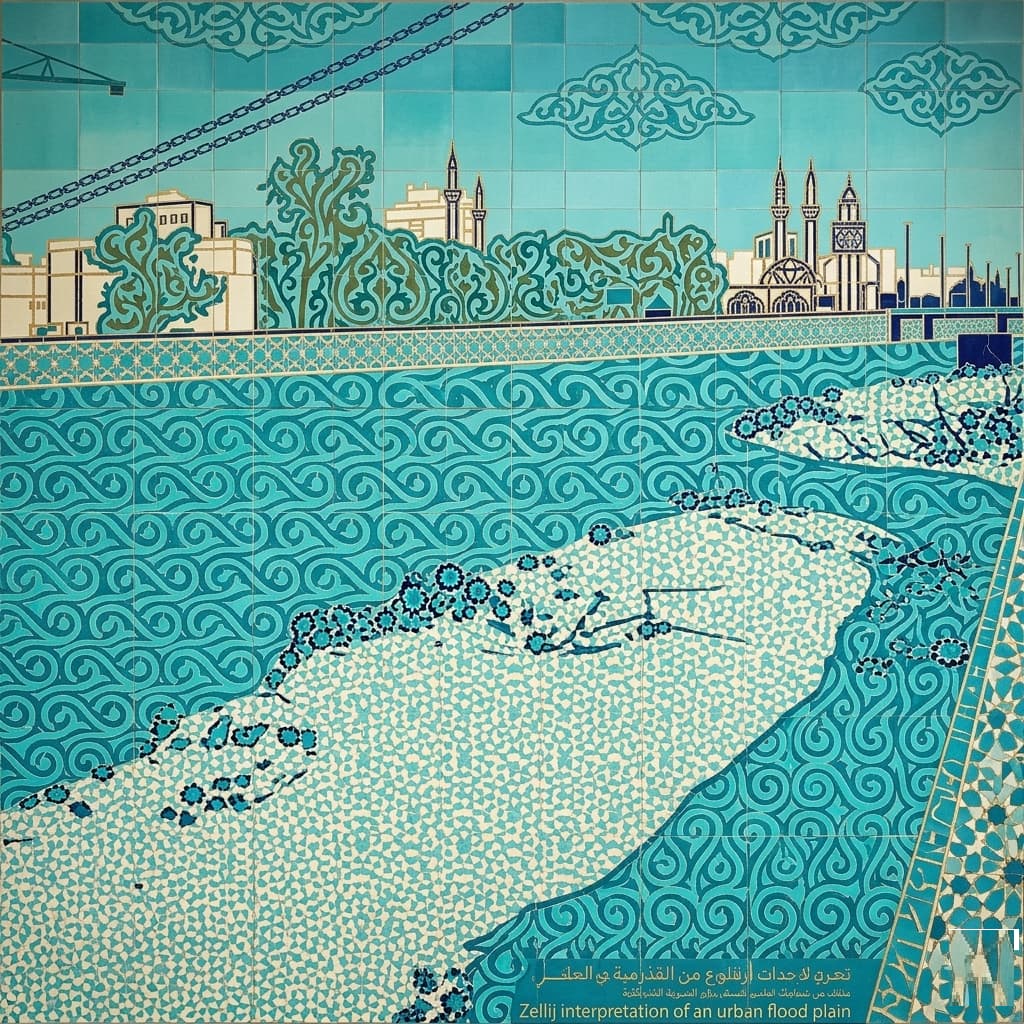
Love this cover artwork? Check out the 5 alternatives above the comment section below.

Table of Contents

At a Glance

The Litani River in the Bekaa Valley and South Lebanon is currently experiencing moderate to severe flooding due to heavy spring rainfall, with several low-lying agricultural zones reporting significant overbanking.

Status & Severity

The Litani River Authority (LRA) reports that water stocks at Qaraoun Lake have exceeded 76 million cubic meters, leading to controlled releases to prevent dam overtopping. Downstream flow is currently aggressive, with crests expected to peak within the next 48 hours in the southern coastal plains.

Affected Communities & Regions

  • Mansoura: Extensive flooding of riverside orchards and local agricultural roads.

  • Qasmieh: High water levels impacting the irrigation canals and citrus groves.

  • Jubb Jannine: Significant saturation of the floodplain affecting local transit routes.

  • Sir el Gharbiyeh: Rising banks threatening low-lying residential perimeters.

  • Tyre District (Coastal Litani): Increased flow velocity causing erosion near the river mouth.

Local Landmarks & Interest

  • Qaraoun Dam: The primary focal point for water level management in the Bekaa region.

  • Khardali Bridge: Monitoring is focused here as a key transit point between Marjayoun and Nabatieh.

  • Qasmieh Bridge: A critical landmark for observing the river’s final discharge into the Mediterranean.

Data Sources & Verification

Information compiled from the Litani River Authority (LRA), local station data in the Bekaa Governorate, and verified on-the-ground visual reports from regional hydrology observers.

Historical Comparison

This event is currently trending higher than the spring saturation levels seen in 2024. While not yet reaching the catastrophic volume of the 2019 “Great Flood,” the rapid rise in the upper basin is a significant outlier for early April. Check our archives for more Lebanon river data.

Regional Context

The current flooding of the Litani River is more than a seasonal weather event; it is a complex intersection of hydrology and human engineering. As the longest river in Lebanon, the Litani’s behavior is heavily dictated by the Qaraoun Dam, which regulates flow for both the Bekaa’s agricultural heartland and hydroelectric power.

Historically, urban expansion and the proliferation of informal settlements in the Bekaa Valley have significantly altered the river’s natural floodplains. When heavy rains arrive, the “human footprint”—including unauthorized diversions, lack of riverbed maintenance, and the constriction of natural channels by residential and industrial growth—exacerbates the water’s rise. This phenomenon is a textbook example of how development choices can amplify natural risks. To understand how these dynamics play out on a global scale, see The River Mixer’s Guide to Human-Driven Flooding: How Engineering and Urban Planning Shape Our Rivers.

In the current April 2026 window, this context is further complicated by recent damage to regional infrastructure. The destruction of key bridges, such as the Al-Dalafa Bridge and branches of the Qasmieh Bridge, has not only hindered local mobility but also altered local flow patterns where debris and collapsed structures act as unintended “choke points,” forcing water into adjacent orchards and towns like Mansoura and Arzi.

Related Content
Don't miss a drop.
Sign up for new river alerts! We're continually expanding our collection with amazing waterways from around the globe. If you're searching for a specific river to enhance your craft, spiritual or research practices, subscribe to stay informed.
subscribe
Editor's note

This blog post uses publicly available information from various sources, synthesized with the help of AI, as a starting point for exploring the world of rivers. Our editors review the content for accuracy, though we encourage readers to verify information intended for primary source use. We strive to use public domain, licensed, or AI-generated images; due to the nature of online sharing, individual image sources are generally not credited. Please contact us regarding any copyright concerns.

Featured Friends
GDACS.
The Global Disaster Alert and Coordination System (GDACS) is a powerful, multi-agency framework established as a joint initiative between the United Nations and the European Commission. It serves as a vital real-time monitoring hub that provides rapid alerts and impact assessments for major natural disasters, including earthquakes, tropical cyclones, and significant river floods. By combining satellite imagery, scientific modeling, and on-the-ground reports, GDACS offers a centralized dashboard that helps international aid organizations and local governments coordinate their emergency responses during the critical first hours of a crisis.
featured
our river collection
Crossword Puzzle

Collection Map
Let's Celebrate.
Travel the world, one river at a time. Explore our map and follow us as we collect precious rivers. Become part of the story by owning your own drops of history.
map
River Clips
Collection Videos.
Trace the origins of our extraordinary river water collection. Watch captivating video clips that capture the breathtaking birthplaces of these rivers.
videos
Be a River Guardian
recent posts
Science
The 10 Largest River Systems in Asia: Ranked by Length and Basin Size

Rivers are the rhythmic pulse of a landscape, carrying more than just water; they transport the history, nutrients, and economic vitality of the regions they touch. From the glacial heights of the Tibetan Plateau to the sprawling industrial deltas of the coast, these ten river systems represent the sheer scale of the continent’s drainage basins. Along with the geography, we’ve included a BasinScore™ for each—a unique rhythmic data profile produced by Basin Beats™—allowing you to hear the heartbeat of the water.

Read More »
News
Central Saudi Arabia Flood Update: Wadi Hanifa and Wadi Al-Batha Levels Rising in Riyadh, Al-Kharj

Current monitoring shows water levels nearing bank-full at the Wadi Hanifa Wetlands as of April 17, 2026. While the Kingdom’s desert wadis often remain dry, the current atmospheric pressure system has triggered significant runoff, turning dry riverbeds into dangerous torrents that threaten low-lying residential sectors and critical transport arteries across the central plateau.

Read More »
History
Book Review: The Invention of Nature by Andrea Wulf – The Global Web of Life and the Forgotten Father of Environmentalism

Andrea Wulf doesn’t hand you a dry historical record; she restores the physical muscle of a man who saw the world as a single, breathing organism. From the 19,413-foot ledge of Chimborazo to the Krakow shelves where the journals were filed, this review looks at the grit required to map the global Web of Life. It’s time to rediscover the surveyor who warned us of a changing climate two centuries before the world was ready to listen.

Read More »
Alternative Covers

We had multiple art options for this post’s cover, but only one could make the cut. Here are 5 runner-ups. Did we choose the right one?

Leave a Reply

Your email address will not be published. Required fields are marked *

For security, use of Google's reCAPTCHA service is required which is subject to the Google Privacy Policy and Terms of Use.