The River Systems at the Heart of the Crisis: The Cultural Lifeline
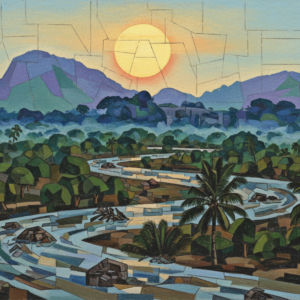
The flood disaster narrative in Sri Lanka is inextricably linked to the cultural and economic importance of its rivers. The island’s major waterways, including the Mahaweli Ganga River (pronounced: Mah-hah-weh-lee Gung-guh), the longest river, are considered the lifelines of the ancient hydraulic civilization that thrived for centuries, earning the island the moniker “Granary of the East.” The Mahaweli’s extensive basin is the focus of the massive Mahaweli Development Programme, which provides over 40% of the nation’s hydroelectricity and irrigates vast tracts of the dry zone. Meanwhile, the Kelani River (pronounced: Keh-lah-nee) holds immense spiritual value, as it is associated with the sacred pilgrimage to Sri Pada (Adam’s Peak) where many of Sri Lanka’s major rivers originate. The Kalu River (pronounced: Kah-loo) completes this trio of high-risk rivers, being highly prone to flash flooding in the southwestern wet zone. These rivers are cultural and economic anchors, yet their immense power is the primary engine of annual disaster.
The Devastating Toll: Quantifying the Loss
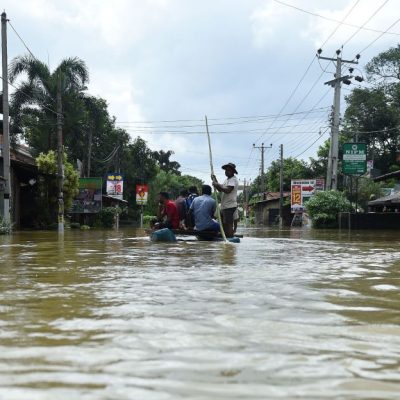
To truly internalize the need for resilience, one must look at the immense human and economic toll exacted by major flood events, which increasingly strain the nation’s infrastructure and finance. For instance, the 2025 Cyclone Ditwah Floods resulted in one of the highest economic costs on record, estimated at $6–7 Billion USD (3–5% of the national GDP), with a death toll that climbed to 479 (and hundreds more missing). Earlier, the 2017 Floods resulted in at least 224 confirmed fatalities and caused extensive damages estimated at over $415 Million USD (with inflation). Another significant event, the 2003 Cyclone Floods, produced the worst flooding in 56 years at the time, leading to 260 total deaths and an estimated $135 Million USD in damages. These figures illustrate that the floods are not isolated incidents but a systemic, annual shock that severely strains the nation’s stability.
The Engine: Monsoon Rains and Steep Geography—The Scientific Factors
The primary cause of the annual floods is the immense volume of water delivered by the Southwest and Northeast monsoons, often amplified by tropical cyclones and low-pressure systems forming in the Bay of Bengal. From a scientific perspective, this rainfall hits the island’s unique asymmetric topography: a high, steep central crystalline core surrounded by flat coastal plains. The steep slopes of the central highlands (like the Hatton Plateau) allow for extremely rapid surface runoff, meaning the rainwater has little time to infiltrate the soil. This drastically increases the rate of flow into the main river channels, leading to a sudden, explosive rise in the fluvial (river-related) flood risk. Climate change models project less annual rainfall for tropical countries, but an increase in rainfall intensity—meaning more water delivered over shorter periods—which perfectly exacerbates this geological vulnerability.
The Human Factor: Building on the Sponge—A Failure of Planning
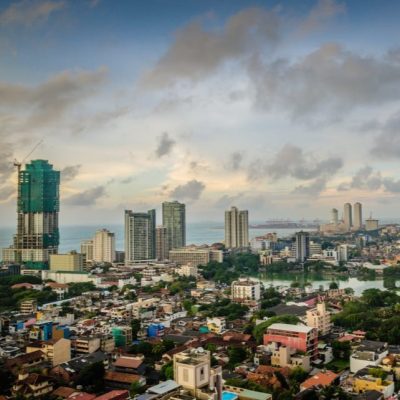
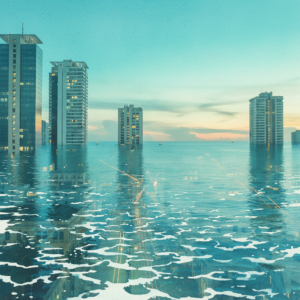
Decades of rapid urban expansion have inadvertently amplified the impact of the floods, particularly in the Colombo area along the Kelani River. Uncontrolled and unplanned development has systematically encroached upon and filled the natural wetlands and marshy floodplains. These ecosystems are vital because they acted as massive, natural detention basins, or “sponges,” capable of storing millions of cubic meters of overflow during peak monsoonal surges. By eliminating these areas for construction and resettlement, human activity has effectively replaced a natural buffer with concrete, forcing the floodwater to move faster and inundate residential and commercial areas in the lower basin. This poor land-use planning is a core driver of modern, intense urban flooding.
A Deepening Vulnerability: The Malaiyaha Tamils and Landslide Risk
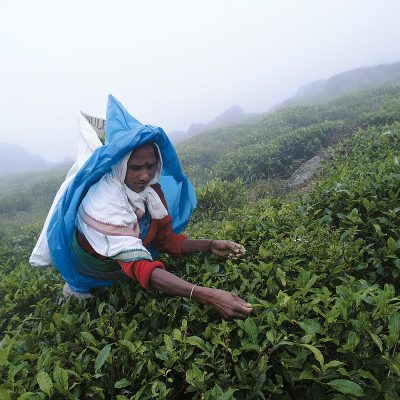
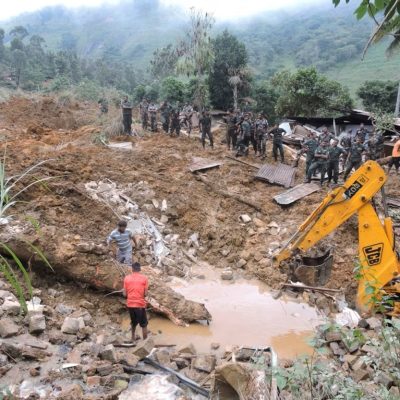
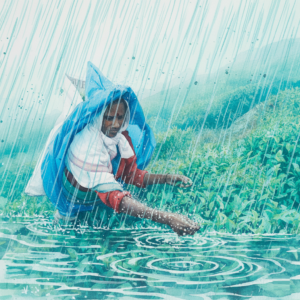
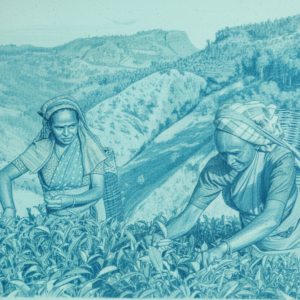
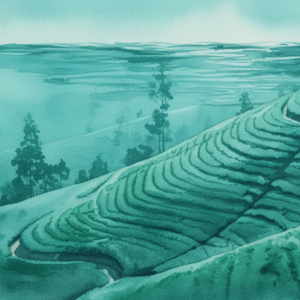
The impact of these climate events is never felt equally; marginalized communities bear the brunt of the devastation. The Malaiyaha Tamils (pronounced: Mah-lai-ya-hah Tah-mils), descendants of South Indian laborers brought to the island in the 19th century, often reside in precarious “line houses” on steep, geologically unstable slopes within the central hill tea estates. Scientifically, these steep slopes become saturated during heavy rains, increasing the pore water pressure within the regolith (loose surface material). This reduces the shear strength of the soil, triggering frequent and deadly landslides. Their remote locations and limited socio-economic resources mean they have less adaptive capacity to deal with both the immediate trauma of being cut off by destroyed roads and the long-term challenge of lost assets and livelihoods.
The Solution: Embracing Nature-Based Resilience
Recognizing the flaws in “gray” infrastructure alone, Sri Lanka is increasingly looking toward Nature-Based Solutions (NBS) for long-term flood mitigation. This involves aggressively protecting and restoring the remaining wetlands in major basins, most notably in the Metro Colombo area. By allowing these marshlands to function as intended, they naturally detain storm water, complementing structural works. Furthermore, geological-based solutions now include techniques like bio-engineering unstable slopes—planting specific vegetation to stabilize the soil and prevent landslides in the hill country. This integrated strategy, complemented by better land-use planning and robust, modern early warning systems, represents a sustainable shift from purely reactive disaster response to proactive climate adaptation.
The Solution: Embracing Nature-Based Resilience
While the commitment to resilience exists, a significant challenge lies in funding and implementing large-scale infrastructure projects that have been studied for decades. Comprehensive river training works and new flood retention reservoirs along rivers like the Kalu River are essential but often delayed investments. Ironically, the ancient Sri Lankan hydraulic civilization mastered the art of water management, diverting the Mahaweli Ganga and constructing massive reservoirs with unique, sophisticated sluice mechanisms to control water flow. Modern structural projects, when combined with NBS and modeled using current hydrological tools like the Rainfall–Runoff–Inundation (RRI) model, would provide the necessary capacity to manage the extreme floods that are becoming increasingly common due to changes in global weather patterns.
From Ancient Wisdom to Regional Resilience
The struggle for flood safety along the Mahaweli Ganga and the Kelani is not a solitary one. As we explored in our regional analysis of [Asia Floods: Connecting the Why Behind the Crisis and the Rivers], the same “climate superchargers” and rapid runoff patterns are currently testing river basins across South and Southeast Asia.
But as the waters of the Kalu River and the Gin Ganga rise, so does our understanding of how to manage them. By looking back at Sri Lanka’s ancient hydraulic mastery—where “not a single drop of rain was allowed to escape to the sea without being utilized”—we find the seeds of modern adaptation. This balance between tradition and technology is at the heart of [The Ultimate Guide to Human-Driven Flooding: How Engineering and Urban Planning Shape Our Rivers]. In that guide, we detail how nature-based solutions and climate-aware urban design are moving us away from purely reactive responses toward a future of proactive, integrated river management.
Keep them clean!
The rivers of Sri Lanka provide a clear reminder: their health directly impacts human safety. Pollutants, plastic debris, and sediment from uncontrolled erosion not only contaminate drinking water but also clog river channels and urban drainage networks, significantly reducing their flow capacity and worsening flood severity. To protect lives and livelihoods from the next monsoon, we must commit to the conservationist principle of maintaining the ecological integrity of these waterways. A cleaner river is a healthier river, and crucially, a safer river for every community in Sri Lanka.
F.A.Q.
The three rivers most critical to the flooding narrative are the Mahaweli Ganga, the longest river, the Kelani River, which impacts the capital region of Colombo, and the Kalu River, which is known for rapid flash flooding in the wet zone.
The primary cause is the immense volume of water delivered by the monsoons, which is often intensified by tropical cyclones. This rainfall hits the island’s unique steep topography, causing rapid surface runoff and increasing the fluvial flood risk.
The Mahaweli Ganga is considered a lifeline of Sri Lanka’s ancient hydraulic civilization, which was once known as the “Granary of the East.” Today, the Mahaweli Development Programme uses the river to provide over 40% of the nation’s hydroelectricity and irrigate vast tracts of the dry zone.
Urban expansion has led to the systematic filling of natural wetlands and marshy floodplains, particularly around the Kelani River. These wetlands previously acted as natural storage basins, and their elimination has forced floodwater to move faster and inundate residential areas.
The economic loss from the 2025 Cyclone Ditwah Floods was estimated to be between $6–7 Billion USD, which represented about 3–5% of the nation’s GDP.