Search
Close this search box.
Search
Close this search box.

River Cruise vs. Ocean Cruise: Why the River Offers a Deeper Journey

For true river enthusiasts and history lovers, the choice is clear. Dive into the world of river cruising and uncover a travel experience that ocean liners simply can't match. From ancient trade routes to all-inclusive luxury, prepare to redefine your idea of a perfect voyage.

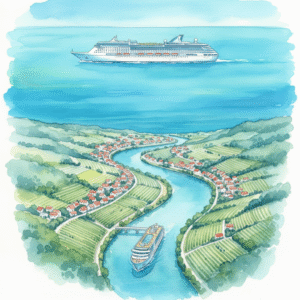
Love this cover artwork? Check out the 5 alternatives above the comment section below.

The Ultimate River Odyssey: Why Inland Waterways Offer a Deeper Journey

For those who find solace and inspiration in the gentle currents and ever-changing landscapes of a river, the call of a cruise is often strong. But when faced with the choice between the vast expanse of the ocean and the intimate embrace of an inland waterway, where should a true river enthusiast cast their anchor? While ocean cruises offer undeniable grandeur, we believe the river cruise experience provides a profoundly different, often more enriching, and undeniably deeper journey that speaks directly to the heart of those who cherish our world’s flowing lifelines.

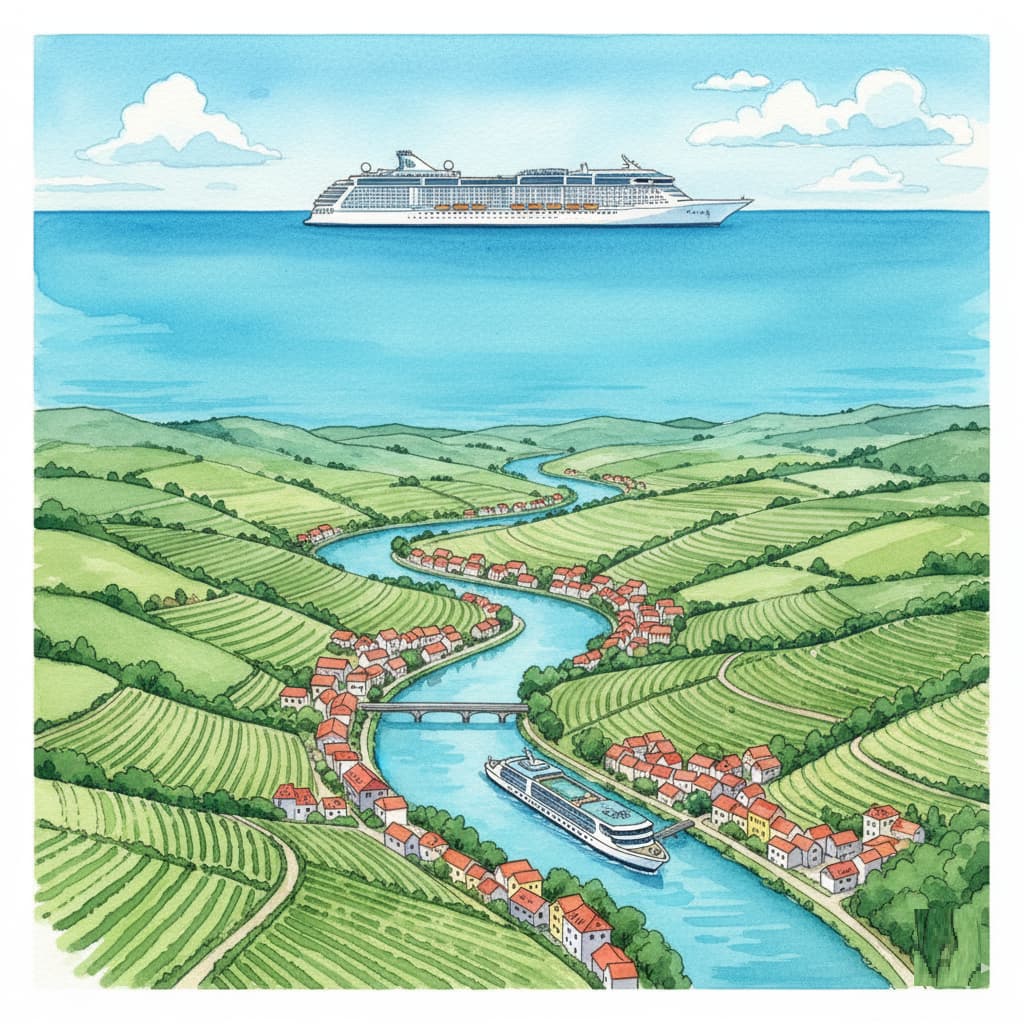
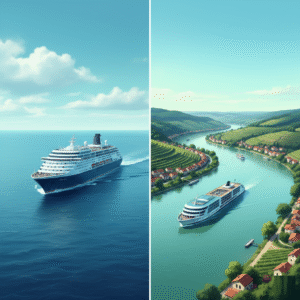
Gliding Past The Terraced Vineyards Of The Douro

The Historical Flow: Ancient Peoples and Early River Travel

River cruises are not a modern invention; they are a return to the oldest form of luxury passenger travel. For history buffs, a river journey is a floating museum, connecting you directly to the trade routes and migration paths of our ancestors.

  • The Ancient Egyptians on the Nile: As early as 2000 B.C., the pharaohs and wealthy elite of Egypt commissioned elaborate wooden barges for travel, procession, and pilgrimage along the Nile River. The Nubian people, inhabiting the upper Nile, used the river as a vital trade artery, moving gold, incense, and ebony, making it the world’s first luxury cruise destination.

  • The Romans on the Rhine and Danube: The Roman Empire strategically utilized European rivers like the Rhine and the Danube to define and defend their northern frontiers (Limes Germanicus). Supply and military transport was common, establishing the earliest “ports” that would later become modern cruising cities like Cologne and Vienna.

  • The Steamboat Era on the Mississippi: The invention of the steamboat in the 19th century created a golden age of passenger travel on the Mississippi River, opening the American frontier and facilitating the movement of diverse populations, from early settlers to traders, inspiring Mark Twain’s famous narratives.

Spirit of America Blend Pendant: Wear the Currents That Forged a Nation

Our "Spirit of America Blend" River Water Pendant Necklace lets you wear a profound, unparalleled connection to the currents that forged a nation. Preserved in its sealed glass is a blend of water from 10 iconic American rivers: the Mississippi, Missouri, Colorado, Columbia, Ohio, Potomac, Hudson, Rio Grande, Snake, and Susquehanna. This pendant is a tangible tribute to the waterways that defined the American frontier and facilitated the movement of diverse populations—embodying the spirit of exploration, from the Gold Rush to the Steamboat Era. Wear this piece of history and keep the journey of the inland waterways close to your heart.
On Sale
A Constant Panorama Of Changing Landscapes

Intimacy vs. Immensity: The Scale of Your Floating Sanctuary

One of the most striking differences between a river and an ocean cruise is the sheer scale of the vessel and the personalized experience it fosters.

  • River Cruise Ship Data (The Intimate View):

    • Passenger Capacity: Typically 100–200 guests.

    • Vessel Length: Max length constrained by locks (e.g., European river locks are usually feet long).

    • Decks: Typically only 3–4 passenger decks.

    • Seasickness Risk: Practically zero due to calm waters and proximity to land.

    • Example Ship: Viking Longship (e.g., Viking Njord), AmaWaterways vessel (e.g., AmaMagna).

  • Ocean Cruise Ship Data (The Grand View):

    • Passenger Capacity: Thousands, ranging from 1,000 to over 6,000 guests.

    • Vessel Length: Can exceed feet (longer than three football fields).

    • Decks: Up to 18+ passenger decks.

    • Seasickness Risk: Moderate to high depending on weather and itinerary (e.g., transatlantic crossings).

Intimacy Versus Immensity The Striking Scale Difference

Destination Deep Dive: Direct Access to History's Core

River cruise ships offer an unparalleled connection to the destination, often docking steps away from UNESCO World Heritage sites and historic city centers.

  • River Cruise Ports & Shore Immersion:

    • Docking: Generally dock directly in the center of cities (e.g., Basel, Passau, Avignon).

    • Excursions: Daily guided tours are typically included (100%) in the fare.

    • Time Spent On Land: High; itineraries are port-intensive with few, if any, “sail days.”

    • View Immersion: Constant, changing panorama of castles, vineyards (like those along the Douro River in Portugal), and riverside life.

  • Ocean Cruise Ports & Shore Immersion:

    • Docking: Often dock at industrial ports miles outside the city center.

    • Excursions: Generally not included and are an added cost.

    • Time Spent On Land: Moderate; many days are spent at sea with no port stops.

    • View Immersion: Mostly open ocean; land views are only visible when near the coast.

The Intimate Embrace Of A River Journey

Value & Inclusions: The All-Inland Advantage

While the initial price of a river cruise may appear higher, the all-inclusive model drastically reduces the final vacation cost compared to the many optional expenses found on large ocean liners.

  • River Cruise (All-Inclusive Focus):

    • Shore Excursions: Included (typically a walking tour/bus tour per port).

    • Beverages: Beer, wine, and soft drinks with lunch/dinner are often included.

    • Wi-Fi: Often complimentary (e.g., Viking, AmaWaterways).

    • Gratuities: Often included in the fare (e.g., Uniworld, Tauck).

    • Total Hidden Costs: Low.

  • Ocean Cruise (À La Carte Focus):

    • Shore Excursions: Extra cost (can add hundreds or thousands to the bill).

    • Beverages: Specialty drinks, premium alcohol, and soda packages are a significant extra cost.

    • Wi-Fi: Often sold as an expensive, limited-data package.

    • Gratuities: Added daily to the onboard bill.

    • Total Hidden Costs: High.

Choosing Your Journey: A Budget Comparison

River cruise pricing is highly dependent on the season, cabin type, and itinerary, but providers generally fall into three distinct tiers based on the level of inclusions and service. The pricing below is a general guide for a European river cruise, per person, double occupancy.

Tier 1: High-End Luxury

This is the ultimate, virtually wallet-free experience. Expect everything to be included: gratuities, unlimited premium alcoholic beverages, private or customizable shore excursions, fine dining, and butler service in top suites. The ships are often more boutique and uniquely styled.


Tier 2: Mid-Range Premium

The most popular category offers an excellent balance of quality and value. Fares are largely all-inclusive, covering at least one excursion per day, Wi-Fi, and complimentary wine, beer, and soft drinks with lunch and dinner. Accommodations are modern and comfortable, and service is high-quality.


Tier 3: Low-End / Value


These lines provide a fantastic entry point to river cruising. The fare typically includes your cabin, all meals, and may include one or two basic excursions. For the greatest value, you should expect to pay extra for drinks outside of mealtimes, Wi-Fi, and some optional, premium excursions.

Final Verdict: Choose the River, Choose the Connection

For our community of river enthusiasts and backseat historians, the argument is not about which cruise is “better,” but which experience is more aligned with a genuine love for culture, history, and intimate travel.

We are strongly biased towards the river cruise, and here is why:

An ocean cruise is a vacation to the ocean, where the ship itself is the destination—a stunning, self-contained resort that happens to float. A river cruise, however, is a journey through history, culture, and nature. As you glide past the ancient castles of the Rhine, the terraced vineyards of the Moselle, or the bustling markets along the Mekong, you are an active participant in the landscape, not a distant observer. The intimate scale of the ships, the constant and engaging scenery, the included cultural tours, and the seamless docking right in the heart of cities like Paris, Budapest, and Amsterdam mean your travel time is maximized for immersion.

The overall message is clear: If your goal is to experience a destination, understand its past, and connect with its pulse—if you prefer a history book to a theme park—then ditch the megaship and follow the current. The river provides the ultimate, most rewarding voyage.

Docking Steps Away From History’s Core

The World's Top River Cruise Operators and Their Specialties

  • Viking River Cruises

    • Specialty: Market leader in river cruising, known for its sleek Scandinavian-designed “Longships.” Offers cruises primarily in Europe (Rhine, Danube, Seine) but also in Asia and on the Mississippi.

  • AmaWaterways

    • Specialty: Known for modern, luxurious ships with signature “twin balconies” (French and outside). Focuses on upscale dining, included excursions, and wine cruises in Europe, Asia, and Africa (Chobe River).

  • Avalon Waterways

    • Specialty: Features “Panorama Suites” with a unique Open-Air Balcony® and beds that face the window. Offers a range of Europe itineraries, as well as Asia and the Amazon.

  • Uniworld Boutique River Cruises

    • Specialty: All-inclusive, luxury “boutique hotel” style ships with highly distinctive décor. Sails in Europe, Russia, Egypt, India, Vietnam & Cambodia.

  • Scenic Luxury Cruises & Tours

    • Specialty: Truly all-inclusive luxury experience with butler service for all guests. Operates “Space-Ships” in Europe, as well as on the Mekong and Irrawaddy Rivers.

  • Emerald Cruises

    • Specialty: Sister company to Scenic, offering a more contemporary, stylish, and premium but less all-inclusive experience than Scenic. Focuses on Europe and Southeast Asia.

  • Tauck River Cruising

    • Specialty: Premium, all-inclusive luxury with almost all on-shore costs covered. Operates fewer guests than most on the same size ships, providing exceptional service and exclusive experiences in Europe.

  • A-ROSA River Cruises

    • Specialty: Appeals to a younger, more active crowd with a casual, contemporary atmosphere and all-inclusive pricing. A strong presence on European rivers (Rhine, Danube, etc.) particularly popular with German and UK travelers.

  • Riviera River Cruises

    • Specialty: Known for high-quality, mid-to-upscale cruises focused on value, with excursions sold separately (though some are included on U.S. sales). Sails major European rivers.

  • Crystal River Cruises

    • Specialty: Ultra-luxury, all-inclusive service (though its future ownership and operation have recently been a topic of industry news, it is an established luxury brand).

  • CroisiEurope

    • Specialty: Europe’s largest river cruise line, offering a wide range of affordable itineraries across numerous European rivers, including smaller waterways and canals, plus exotic destinations like the Mekong and Nile.

  • Amadeus River Cruises (Lueftner Cruises)

    • Specialty: Operates a fleet of classic, high-quality ships mainly on the Rhine and Danube for the German and international markets. Offers a premium European experience.

  • American Cruise Lines

    • Specialty: While domestic (USA-based), they are a major international operator for global travelers. Known for paddlewheelers and modern riverboats on US waterways, including the Mississippi River.

  • Pandaw Cruises

    • Specialty: Expedition-style river cruising in Asia, known for their unique, hand-finished colonial-era ships with ultra-shallow drafts. Primary focus is the Mekong and Irrawaddy Rivers.

  • APT Luxury River Cruises (Australian Pacific Touring)

    • Specialty: Primarily for Australian and UK markets, offering luxury, all-inclusive cruises in Europe and Asia (Mekong, Ganges). Often charters ships from AmaWaterways and other lines.

  • Gate 1 Travel

    • Specialty: Known for value-oriented travel packages that include river cruises, often using chartered vessels on European rivers.

  • Grand Circle Cruise Line

    • Specialty: Focuses on educational travel for Americans aged 50 and over. Operates mostly on European rivers with a heavy emphasis on culturally immersive itineraries.

  • Riverside Luxury Cruises

    • Specialty: A newer luxury brand, notable for acquiring and refurbishing former Crystal River Cruises ships to offer all-inclusive luxury in Europe.

  • Nicko Tours

    • Specialty: German-based operator known for a diverse fleet of ships and a wide variety of itineraries, including more exotic destinations beyond the main European rivers.

  • Katarina Line

    • Specialty: Focuses on small-ship cruises along the Croatian coast and rivers, often on smaller, boutique-style vessels.

  • Scylla AG

    • Specialty: A major European shipping company that owns and operates its own fleet, but often charters its luxury river vessels to other tour operators and brands.

  • Collette

    • Specialty: A global tour operator that includes river cruises as part of its organized travel packages in Europe and other regions, using chartered ships.

  • Adventures by Disney

    • Specialty: Operates family-friendly river cruises on chartered vessels (often from AmaWaterways), offering Disney-quality service and unique excursions for children and adults.

  • Road Scholar

    • Specialty: Educational travel organization offering culturally rich and education-focused river cruises, primarily in Europe.

  • Voyages to Antiquity

    • Specialty: While also doing ocean cruises, their programs include river components, focusing on historically and archaeologically significant destinations.

  • Travelmarvel

    • Specialty: A part of the APT Travel Group, offering premium but moderately priced river cruises in Europe and Asia.

  • VIVA Cruises

    • Specialty: A German river cruise line focusing on European rivers, known for its all-inclusive offerings and modern fleet.

  • Tulip Time Cruises

    • Specialty: A specialized seasonal cruise offering, often chartered by various companies, focused exclusively on the Dutch and Belgian waterways during the spring tulip season.

    •  

Keep them clean!

The majestic rivers you sail on—from the historical Rhine and Danube to the exotic Mekong and Amazon—are the world’s vital arteries, providing drinking water for billions and sustaining unique biodiversity. Recognizing this, the river cruise industry is increasingly dedicated to their preservation. Lines are investing heavily in new technologies like hybrid propulsion, which combines diesel engines with electric power to reduce emissions, and Advanced Water Treatment Systems (AWTS) to ensure nothing harmful is discharged into the delicate river ecosystems. Furthermore, the global push to eliminate single-use plastics is a core commitment, minimizing their operational footprint and encouraging a ‘leave no trace’ philosophy.

F.A.Q.

An ocean cruise is described as a “vacation to the ocean” where the ship itself is the destination—a stunning, self-contained resort. A river cruise, however, is a journey through history, culture, and nature, with the destination being the focus.

River cruise ships are significantly smaller, typically carrying 100–200 guests, which fosters a more intimate experience. Ocean cruise ships, in contrast, can carry thousands, ranging from 1,000 to over 6,000 guests.

The risk of seasickness is practically zero on a river cruise because the ships navigate calm inland waters and are in constant proximity to land, avoiding the rough waves of the open ocean.

River cruises are described as a return to the oldest form of luxury passenger travel. They connect travelers directly to the trade routes and migration paths of ancestors, acting as a floating museum for history buffs.

River cruise ships generally dock directly in the center of cities (e.g., Basel, Passau, Avignon), often just steps away from historic city centers. Ocean liners often dock at industrial ports miles outside the city center.

Additional resources

Related Content

Don't miss a drop.

Sign up for new river alerts! We're continually expanding our collection with amazing waterways from around the globe. If you're searching for a specific river to enhance your craft, spiritual or research practices, subscribe to stay informed.
subscribe

Editor's note

This blog post uses publicly available information from various sources, synthesized with the help of AI, as a starting point for exploring the world of rivers. Our editors review the content for accuracy, though we encourage readers to verify information intended for primary source use. We strive to use public domain, licensed, or AI-generated images; due to the nature of online sharing, individual image sources are generally not credited. Please contact us regarding any copyright concerns.

Featured Friends

The River Cruise Lady.

Meet Linda May Dinsmore, affectionately known as The River Cruise Lady, a passionate travel expert whose blog centers heavily on the tranquil world of river and small ship cruises in Europe. Drawing from her extensive personal experience navigating iconic waterways like the Rhine, Danube, Seine, and Rhône, Linda offers invaluable advice and first-hand reviews. Her focus is on making this style of travel accessible, covering everything from ship reviews and cruising tips for first-timers to dedicated content on multi-generation trips and a general philosophy that travel, especially by river, enriches your life.
featured

our river collection

Crossword Puzzle

Collection Map

Let's Celebrate.

Travel the world, one river at a time. Explore our map and follow us as we collect precious rivers. Become part of the story by owning your own drops of history.
map

River Clips

Collection Videos.

Trace the origins of our extraordinary river water collection. Watch captivating video clips that capture the breathtaking birthplaces of these rivers.
videos

Be a River Guardian

Buyer Rivers

recent posts

News

What is a ‘Turbocharged Water Cycle’ and How Did it Turn Jamaica’s Black River into a Weapon?

The gentle giant had turned into a weapon. For centuries, the Black River in Jamaica has been a cultural icon, its tannin-stained waters host to endangered crocodiles and historic trade. But when Hurricane Melissa unleashed a “Turbocharged Water Cycle,” the river’s polite flow was replaced by a geological wrecking ball. Read how a changing climate is permanently changing Jamaica’s geography and forcing us to redefine what a river can do.

Read More »
Science

7 Essential Differences: River Tributary vs. Distributary Explained

Every great river has a story—and a complex network of veins. We dive deep into the fascinating, yet opposite, roles played by tributaries and distributaries. Tributaries are the powerful collectors that build a river’s strength, often starting in rugged headwaters perfect for outdoor adventure. Distributaries, conversely, are the great dividers that create fertile, culturally rich river deltas. Understanding the distinction between these two key geographical features is essential for appreciating the flow of history, the diversity of nature, and the critical importance of global river conservation.

Read More »
News

Amazon River Mouth: Why Oil Drilling Threatens All

The battle for the Amazon’s future is playing out at its mouth. This vital ecosystem—home to Indigenous and Quilombola communities, a massive coral reef, and unique mangroves—is the target of Brazil’s state-owned oil company, Petrobras. The pursuit of a new multi-billion-barrel oil frontier clashes directly with the health of the world’s most critical river, testing Brazil’s climate promises and risking catastrophic, widespread environmental destruction.

Read More »
History

The Saraswati River: How Tectonics and Drought Erased the Lifeblood of the Indus Civilization

Forget Atlantis. Before the Pyramids, before Rome, one of the world’s mightiest empires—the ancestor of modern India—was powered by a colossal, holy river called the Saraswati (Pronounced: Suh-RUH-swah-tee). Then, it simply disappeared. Vanished. What force of nature was powerful enough to erase a river more revered than the Ganges? The answer is a stunning blend of ancient scripture, desert whispers, and modern satellite science. Get ready to play historical detective.

Read More »
News

Jane Goodall’s Passing: What the River Teaches Us About Her Urgent Conservation Legacy

When Jane Goodall first entered the rainforests of Gombe, she saw more than trees and chimps; she saw an entire, interconnected system. That same biological truth is mirrored perfectly by our planet’s rivers. They are the blue arteries of the Earth, delivering life from the mountains to the sea. In honor of Goodall’s enduring legacy, we explore how the principles of a healthy river—interconnectedness, resilience, and vitality—are the very principles she spent her lifetime championing, and why her passing serves as an urgent reminder of our duty to protect every drop.

Read More »
Science

Alluvial Fans vs. River Deltas: Key Geographical Differences Explained

Ever wondered what happens to all the sediment a river carries? From towering mountains to vast oceans, rivers are constantly shaping our landscape. Join us as we explore two fascinating landforms born from a river’s tireless work: the rugged alluvial fan and the sprawling delta. Understanding their differences helps us appreciate the diverse ways water interacts with and transforms the Earth’s geology, creating vital ecosystems and crucial areas for human settlement.

Read More »

Alternative Covers

We had multiple art options for this post’s cover, but only one could make the cut. Here are 5 runner-ups. Did we choose the right one?

Leave a Reply

Your email address will not be published. Required fields are marked *

For security, use of Google's reCAPTCHA service is required which is subject to the Google Privacy Policy and Terms of Use.