logo-b81fc6af2faedb728fbd5fa5eeed23730c5b8be653318097907f3f0a5adbc5a6
Click for a Unique Window into the Untouched Amazon Waterway: Watch Live Now! (Courtesy of Junglekeepers)

A Royal Coronation: The Ganges on the Thames

Imagine sailing across the vast ocean, carrying a sacred cargo that could cleanse sins and grant salvation. That's exactly what Maharaja Sawai Madho Singh II did in 1902. But why would a powerful Indian ruler embark on such an extraordinary journey? The answer lies in a river that flows through the heart of India: the Ganges.
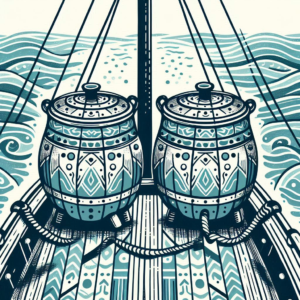
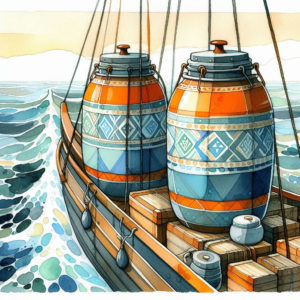
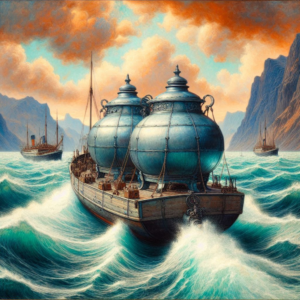
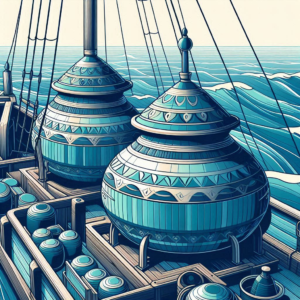
Love this cover artwork? Check out the 5 alternatives above the comment section below.

Table of Contents

A Sacred Journey: Madho Singh's Ganges River Pilgrimage

Hindus consider the Ganges River the holiest of rivers, believing its waters have the power to purify the soul. For Maharaja Sawai Madho Singh II, a devout Hindu, crossing the ocean to attend King Edward VII’s coronation in 1902 posed a dilemma. According to Hindu scriptures, doing so would pollute his soul. To overcome this crisis, Madho Singh chartered a ship and filled it with thousands of liters of sacred Ganges River water. This wasn’t just any water; it was a lifeline to his faith.

A Floating Shrine

The steamship SS Olympia, the ship chartered by Madho Singh, was transformed into a floating shrine. One of the rooms below deck was converted into a sacred space, adorned with images of Hindu deities and filled with the sweet aroma of incense. The priests stipulated that the maharaja could embark on the voyage to Britain under the condition that he prepare his own meals, ensuring they remained free from any contact with meat or beef.

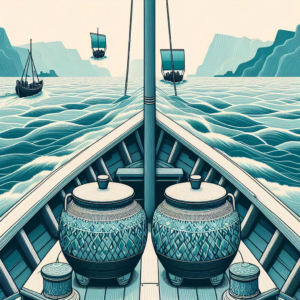
Astonishingly, the ship was also fitted with two enormous silver urns, each capable of holding 4,000 liters of sacred Ganges River water. The silver urns were a masterpiece of craftsmanship, created from 14,000 silver coins that would be valued in the millions today. These urns were filled with the sacred waters of the Ganges, drawn from Haridwar, a city known for its spiritual significance. The choice of silver may have been due to its long-standing reputation for antimicrobial properties.

Today, tourists visiting the City Palace of Jaipur, India, can still marvel at the stunning silver urns that adorn the palace.

Maharaja Sawai Madho Singh II River Mixer
Maharaja Sawai Madho Singh II

The Scale of the Sacred Cargo

To put the scale of the Maharaja’s cargo into perspective, consider that 1,800 liters of water is equivalent to approximately 475 gallons or 2 cubic meters. This is enough to fill 5 bathtubs! The two urns combined could hold almost 4,000 liters or 900 gallons. Each silver urn, towering over a man at 1.6 meters tall and weighing a staggering 247 kilograms, is recognized by the Guinness World Records as the largest single silver object.

In today’s world, transporting such a large quantity of water over such a long distance would be a logistical challenge. However, the Maharaja’s dedication to his faith and his resources as a ruler allowed him to overcome these obstacles.

River Mixer Maharaja’s Urn Ganges River Water
1800 Liter Silver Bespoke Urn

The Journey and British Reception

The Maharaja’s journey to England was a remarkable feat of faith and innovation. The long and arduous voyage on the SS Olympia was fraught with challenges, as the crew braved stormy seas and worked tirelessly to maintain the purity of the sacred Ganges water. Upon arrival in London, the Maharaja’s unusual cargo and elaborate preparations captured the imagination of the British public. His unwavering devotion to his faith was evident to all, as he used the sacred water for all his needs during his stay, ensuring that his soul remained pure. Maharaja Madho Singh’s story remains a testament to the enduring power of belief and the enduring spirit of human ingenuity.

Why the Maharaja's Voyage Continues to Fascinate?

The story of Maharaja Madho Singh II’s journey to England continues to captivate people today for several reasons:

  1. A Unique Blend of Faith and Adventure: The story combines elements of religious devotion, cultural tradition, and maritime exploration. It offers a glimpse into a world vastly different from our own, where faith played a central role in daily life.

  2. A Testament to Human Ingenuity: The Maharaja’s innovative solution to the challenge of maintaining his faith while traveling abroad is a testament to human ingenuity. His ability to adapt and overcome obstacles is inspiring.

  3. A Cultural Exchange: The journey also represents a cultural exchange between India and England. It provides insight into the curiosity and fascination that people from different cultures had for each other at the time.

  4. A Symbol of Devotion: The Maharaja’s unwavering devotion to his faith is a powerful example of the lengths to which people will go to uphold their beliefs. It serves as a reminder of the enduring power of faith and tradition.

  5. A Historical Perspective: The story offers a glimpse into a historical period when travel was much more challenging than it is today. It provides a unique perspective on the world of the early 20th century.

In essence, the Maharaja’s voyage is a fascinating tale that combines elements of adventure, faith, culture, and history. It continues to resonate with people today because it offers a unique and inspiring glimpse into a bygone era.

Ganges Water: A Symbol of Faith on the Move

Many Indians today still carry Ganges water with them when they travel. It’s a common practice among devout Hindus to bring a small amount of Ganges water in a metal container or bottle.

This water is believed to have purifying properties and is used for various religious rituals, such as:

  • Ablution: Pouring the water over oneself as a form of purification.
  • Offering: Offering the water to deities as a part of prayers or rituals.
  • Drinking: Consuming the water as a sacred drink.

Carrying Ganges water while traveling is seen as a way to maintain a connection to their homeland and their faith, even when they are far away.

Keep them clean!

The Maharaja’s journey to London, carrying the sacred waters of the Ganges, symbolizes the deep connection between India and its rivers. This historic act not only celebrated the coronation of King Edward VII but also highlighted the importance of these natural resources. Today, the Ganges, once revered as a divine river, faces significant pollution and environmental challenges. Its plight serves as a stark reminder of the consequences of human neglect and the urgent need for global action to protect our rivers and waterways. If we fail to learn from the Ganges’s fate, the fate of all our world’s rivers may be sealed.

F.A.Q.

The Maharaja was a devout Hindu who believed that the Ganges River had purifying powers. To maintain his faith while attending King Edward VII’s coronation, he brought sacred Ganges water to England to ensure his soul remained pure.

The Maharaja chartered a ship, the SS Olympia, and transformed it into a floating shrine. The ship was equipped with two large silver urns to hold the sacred water.

The journey was fraught with challenges, including stormy seas and the need to maintain the purity of the water. The crew faced the task of preserving the sacred cargo throughout the voyage.

The Maharaja’s unusual cargo and elaborate preparations captured the imagination of the British public. His unwavering devotion to his faith was evident to all, and his story became a testament to the enduring power of belief.

The Maharaja’s story continues to captivate people due to its unique blend of faith, adventure, cultural exchange, and historical significance. It offers a glimpse into a bygone era and serves as a reminder of the enduring power of human ingenuity and devotion.

Additional resources

Related Content
Don't miss a drop.
Sign up for new river alerts! We're continually expanding our collection with amazing waterways from around the globe. If you're searching for a specific river to enhance your craft, spiritual or research practices, subscribe to stay informed.
subscribe
Editor's note

This blog post uses publicly available information from various sources, synthesized with the help of AI, as a starting point for exploring the world of rivers. Our editors review the content for accuracy, though we encourage readers to verify information intended for primary source use. We strive to use public domain, licensed, or AI-generated images; due to the nature of online sharing, individual image sources are generally not credited. Please contact us regarding any copyright concerns.

Featured Friends
Ganga Action Parivar.
The Ganga Action Parivar is a collective of organizations and individuals dedicated to the conservation and rejuvenation of the River Ganges, a sacred and vital waterway in India. Their mission is to promote awareness about the environmental challenges facing the Ganga, foster community participation in conservation efforts, and implement sustainable solutions to address pollution, deforestation, and other threats to the river's health. Through their initiatives, the Ganga Action Parivar seeks to restore the Ganga to its pristine condition, ensuring its ecological integrity and cultural significance for generations to come.
featured
our river collection
Crossword Puzzle

Collection Map
Let's Celebrate.
Travel the world, one river at a time. Explore our map and follow us as we collect precious rivers. Become part of the story by owning your own drops of history.
map
River Clips
Collection Videos.
Trace the origins of our extraordinary river water collection. Watch captivating video clips that capture the breathtaking birthplaces of these rivers.
videos
Be a River Guardian
recent posts
Science
The 10 Largest River Systems in Asia: Ranked by Length and Basin Size

Rivers are the rhythmic pulse of a landscape, carrying more than just water; they transport the history, nutrients, and economic vitality of the regions they touch. From the glacial heights of the Tibetan Plateau to the sprawling industrial deltas of the coast, these ten river systems represent the sheer scale of the continent’s drainage basins. Along with the geography, we’ve included a BasinScore™ for each—a unique rhythmic data profile produced by Basin Beats™—allowing you to hear the heartbeat of the water.

Read More »
News
Central Saudi Arabia Flood Update: Wadi Hanifa and Wadi Al-Batha Levels Rising in Riyadh, Al-Kharj

Current monitoring shows water levels nearing bank-full at the Wadi Hanifa Wetlands as of April 17, 2026. While the Kingdom’s desert wadis often remain dry, the current atmospheric pressure system has triggered significant runoff, turning dry riverbeds into dangerous torrents that threaten low-lying residential sectors and critical transport arteries across the central plateau.

Read More »
History
Book Review: The Invention of Nature by Andrea Wulf – The Global Web of Life and the Forgotten Father of Environmentalism

Andrea Wulf doesn’t hand you a dry historical record; she restores the physical muscle of a man who saw the world as a single, breathing organism. From the 19,413-foot ledge of Chimborazo to the Krakow shelves where the journals were filed, this review looks at the grit required to map the global Web of Life. It’s time to rediscover the surveyor who warned us of a changing climate two centuries before the world was ready to listen.

Read More »
Alternative Covers

We had multiple art options for this post’s cover, but only one could make the cut. Here are 5 runner-ups. Did we choose the right one?

Leave a Reply

Your email address will not be published. Required fields are marked *

For security, use of Google's reCAPTCHA service is required which is subject to the Google Privacy Policy and Terms of Use.