Part I: The Ghost of the River — A Vision of What Was
1. The Meandering "Wild" River
In its natural state, a river rarely followed a straight line. It was a complex, shifting braid of channels, wetlands, and islands.
The Seasonal Pulse: Rivers “breathed.” They spilled over their banks every spring, depositing nutrient-rich silt that created the world’s most fertile lands, like the Nile Valley or the Mesopotamian (mes-oh-poh-TAY-mee-un) Fertile Crescent.
The Sound of Life: A healthy river was loud—filled with the splash of migratory fish, the call of Riparian (ri-PAIR-ee-un) birds, and the constant movement of water over gravel “riffles” that naturally oxygenated the stream.
A Sacred Bond: From the Ganges in India, revered as a goddess that purifies the soul, to the Whanganui (WHAH-ngah-noo-ee) in New Zealand, which the Māori recognize as a legal person, rivers were the center of spiritual life.
The "Rhythmic Break"
While the history of our global rivers is written in textbooks and the pollution is measured in parts per million, their full reality can be felt through sound. To experience the data of these inland waterways as a rhythmic profile, listen to a BasinScore™. We’ve turned the ‘heartbeat’ of our global river health index into original tracks, allowing you to hear the tension of the crisis and the pulse of the restoration efforts discussed throughout this guide.
2. The River as the Original World Wide Web
Long before paved roads or rail lines, rivers were the primary infrastructure of human connection. They were the “Information Superhighways” of the ancient world.
The Silk Road of the Water: Rivers like the Danube and the Volga allowed for the exchange of not just goods, but languages, religions, and technologies across vast distances.
Indigenous Navigation: In North America, the Mississippi and Missouri river systems supported complex trade networks for nations like the Cahokia (ka-HO-kee-ah), who used the waterways to transport copper, shells, and stone across half a continent.
The Birth of Exploration: From the Viking longships on the Dnieper (NEE-per) to the Polynesian understanding of estuarine flows, human expansion was dictated by the “reach” of the river.
3. The Cultural Mirror: Art, Music, and Memory
Rivers have always been the primary metaphor for the human experience—representing the passage of time, the flow of life, and the inevitability of change.
The Delta Blues: The Mississippi River delta gave birth to the Blues, a genre of music rooted in the lived experience of the river’s surrounding landscape. The river’s floods and ebbs are woven into the very rhythm of the music.
Literary Giants: From Mark Twain’s portrayal of the Mississippi to the Yellow River (HUANG-huh) in Chinese poetry, rivers are the world’s most enduring literary protagonists. They represent the boundary between the known world and the wilderness.
The Living Archive: For many cultures, the river is a repository of memory. In the Congo River basin, oral histories describe the river as a witness to the rise and fall of kingdoms, a constant presence that outlasts the humans on its banks.
Part II: The Great Disconnect — How Our Habits Changed
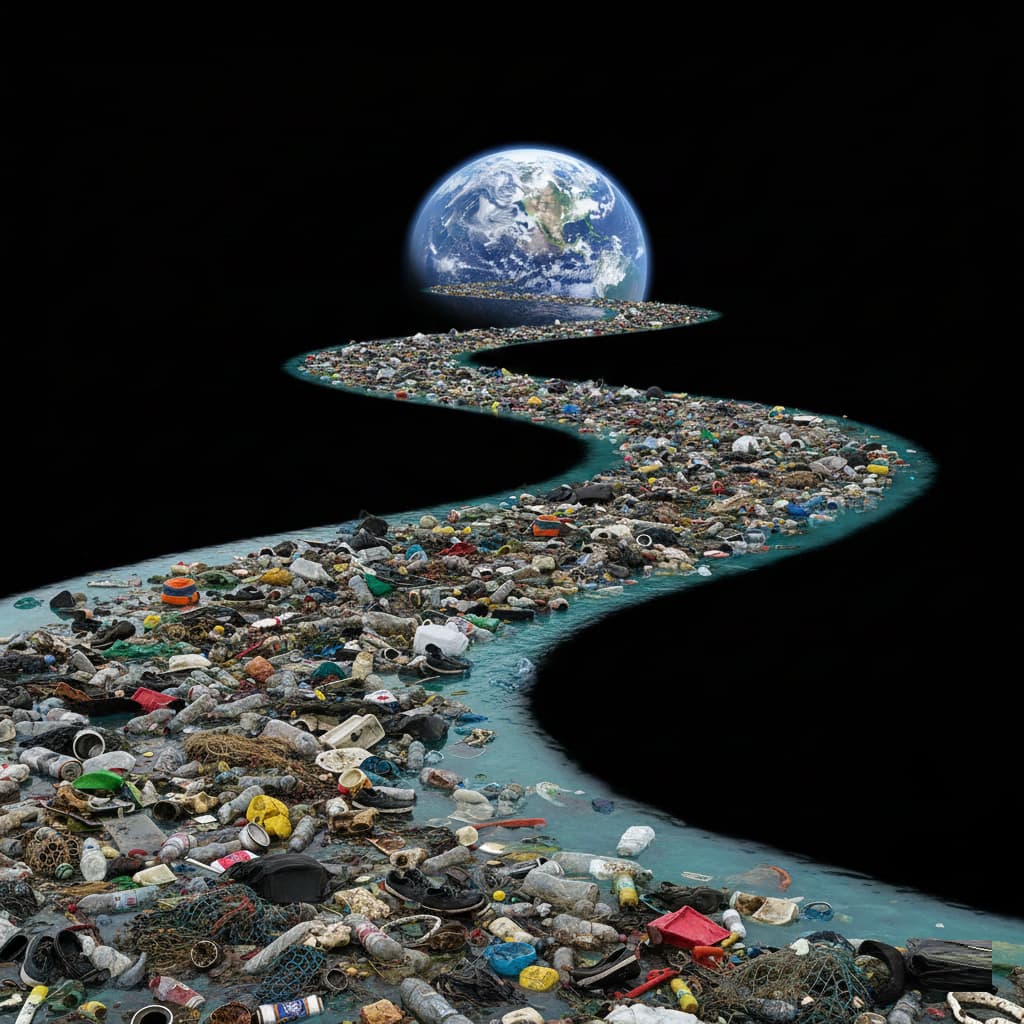
The transition from “sacred waters” to “industrial drainage” was driven by a fundamental shift in human habits.
1. From Seasonal Pulse to Constant Control
As we transitioned into the Industrial Age, we stopped adapting our lives to the river and began forcing the river to adapt to us.
The Habit of “Straightening”: We began to view natural curves as “wasted space.” To protect property and speed up navigation, we channelized them—encasing them in concrete. This killed the river’s ability to filter itself and turned it into a high-speed “water pipe.”
The Taming of the Flood: We built massive levees to separate the river from its floodplain. While this allowed us to build cities closer to the water, it broke the cycle of groundwater recharge, leading to the “sinking” of deltas like the Mississippi and the Rhine.
2. The Rise of the "Away" Mentality
With the advent of the flush toilet and industrial drainage, we developed the habit of using rivers as invisible sinks for chemical runoff from our lawns, pharmaceuticals from our medicine cabinets, and microplastics from our synthetic clothing. We forgot that a river is a single, unified system; what happens in the headwaters of the Amazon inevitably reaches the Atlantic.
3. The Energy Thirst
The 20th century saw a global habit of “locking” rivers behind concrete for electricity. While hydropower provided energy, we traded the migration of the Salmon and the Sturgeon for the convenience of the light switch, leading to a silent extinction beneath the surface of our reservoirs.
Part III: The Pollution Crisis — Emerging and Persistent Threats
Modern river pollution is a chemical and biological cocktail that evolves with our industrial and digital habits.
1. The Heavyweight Polluters: Industry and Mega-Cities
The Citarum River (Indonesia): Often cited as the world’s most polluted river, it receives 340,000 tons of wastewater daily from 2,000+ textile factories. Lead and mercury levels here frequently exceed safe limits by thousands of times. Read how SUNGHAI DESIGN is trying to solve this problem in Bali by turning plastic waste into outdoor furniture and more.
The Buriganga River (Bangladesh): A critical artery for Dhaka, this river is “biologically dead” in many stretches due to the toxic waste dumped daily by the Hazaribagh tanneries.
The Marilao River (Philippines): This waterway suffers from precious metal refining, lead-acid battery recycling, and open dumps, leaking chromium and heavy metals into the local food chain.
The Yamuna River (India): Notorious for thick layers of toxic white foam caused by high phosphate levels from detergents and industrial surfactants from Delhi.
2. The Agricultural "Dead Zone" Effect
Industrial agriculture is the leading cause of Eutrophication (yoo-tro-fi-KAY-shun), a general term describing a process in which nutrients accumulate in a body of water, resulting in an increased growth of organisms that may deplete the oxygen in the water.
The Mississippi River (USA): Runoff from the “Corn Belt” creates an annual “Dead Zone” in the Gulf of Mexico—an area of hypoxia (low oxygen) where marine life cannot survive.
The River Wye (UK): Facing an ecological crisis due to phosphorus runoff from intensive poultry farming, causing algal blooms that choke out foundational plant life.
The Murray-Darling Basin (Australia): Has faced massive “fish kills” numbering in the millions due to over-extraction and toxic blue-green algae blooms.
3. The New Frontier: "Forever Chemicals" and Tech
PFAS (Per- and Polyfluoroalkyl Substances): These “forever chemicals” found in nearly every major river in the US and Europe are linked to cancer and immune disruption.
Pharmaceutical Contamination: A study led by the University of York detected high concentrations of antibiotics and antidepressants in 258 rivers worldwide.
Thermal Pollution: Increasingly used for cooling data centers and nuclear power plants, rivers like the Tennessee River (USA) face excessive heat discharge that “cooks” native mussels and fish.
Part IV: Fragmentation — The Silent Killer
Fragmentation—the physical breaking of a river’s flow—is a silent crisis. A river is a conveyor belt of life; when you break the belt, the system fails.
1. The Global Dam Crisis
Only one-third of the world’s 242 longest rivers remain free-flowing.
The Mekong River (Southeast Asia): Dams such as the Xayaburi threaten the world’s most productive inland fishery and block the migration of the Mekong Giant Catfish.
The Amazon Basin (South America): More than 140 planned dams threaten the Amazonian Pink Dolphin (boto) and prevent sediment flow from the Andes.
The Yangtze River (China): The Three Gorges Dam has led to the functional extinction of the Baiji (BYE-jee) white dolphin and the Chinese Paddlefish.
2. "Death by a Thousand Cuts"
Europe’s Forgotten Barriers: Research by the AMBER Project revealed Europe has at least 1.2 million barriers, most of which are small, obsolete weirs and culverts.
Road-Stream Crossings (USA): Thousands of poorly designed pipes under roads act as “mini-dams,” preventing salmon from reaching critical headwater spawning grounds.
3. Sediment Starvation: The Sinking of Deltas
The Nile Delta (Egypt): Since the Aswan High Dam, almost no sediment reaches the Mediterranean, causing the delta to erode and succumb to saltwater intrusion.
The Colorado River (USA/Mexico): So heavily dammed it rarely reaches the sea, destroying a formerly massive wetland habitat for migratory birds.
The Zambezi River (Africa): The Kariba and Cahora Bassa dams have collapsed local shrimp and fish populations by trapping essential sediments.
Part V: The Restoration Revolution — Bringing Rivers Back to Life
We are moving toward Process-Based Restoration, which allows the river to heal itself by restoring its natural rhythms.
1. Dam Removal: The Quickest Path to Recovery
The Elwha River Success (USA): The gold standard for restoration. Within years of dam removal, salmon populations returned, and the delta began to reform naturally.
The Sélune River (France): One of the largest projects in Europe, reconnecting the river to the Bay of Mont-Saint-Michel for Atlantic salmon and eels.
The Penobscot River (USA): A collaboration with the Penobscot Indian Nation that opened 2,000 miles of habitat while maintaining hydropower on other sections.
2. Nature-Based Solutions (NbS)
The “Room for the River” Program (Netherlands): Lowering floodplains to give water space to spread safely, reducing flood risk while creating new habitats.
Beaver Mimicry: Using BDAs (Beaver Dam Analogs) to slow water flow, recharge groundwater, and restore lush wetlands without heavy engineering.
The Isar River (Germany): Munich removed concrete linings to allow the river to braid naturally, cooling the city and restoring gravel banks.
3. Biological and Community-Led Healing
Billion Oyster Project (USA): Using oysters in the Hudson River to filter nitrogen and pollutants—one oyster can filter 50 gallons a day.
The Pasig River (Philippines): Using bioremediation (—floating wetland gardens of vetiver grass—to extract toxins.
The Skjern River (Denmark): Undoing a 1960s drainage project to restore 2,200 hectares of wetlands and a thriving salmon fishery.
Conclusion
A river is not a pipe; it is a living ecosystem. As the recovery of the Thames proves—once “biologically dead” and now home to seals—nature is resilient if given the chance. By valuing the curve of the river and restoring its flow, we protect our own future.
Keep them clean!
We often look at a map and see rivers as blue lines—static borders or simple paths from point A to point B. But as we have explored, a river is a pulse. It is a living, breathing entity that reflects the health of the land it carves through and the character of the people who live along its banks.
To save a river is to acknowledge that we are part of a larger, fluid system. When we fight for a cleaner Citarum or advocate for the removal of a crumbling dam on the Elwha, we are performing essential “surgery” on the planet’s circulatory system. We are ensuring that the water which sustains a kingfisher today will be the same water that recharges our aquifers and sustains our grandchildren tomorrow.
The restoration revolution isn’t just about engineering; it is about humility. It is about realizing that after a century of trying to “tame” the water, our greatest success comes from stepping back and letting the river remember how to be wild.
Every time you pick up litter on a local bank, support a nature-based solution, or simply sit by a stream and listen to its “riffles,” you are participating in the healing of our world. The rivers have carried us for millennia—now, it is our turn to carry them.
F.A.Q.
Rivers function like a circulatory system; they transport water, nutrients, and sediment across vast landscapes to “feed” ecosystems. Just as arteries sustain the human body, healthy rivers sustain global biodiversity and provide the primary freshwater source for billions of people.
While straightening (channelization) was historically done to speed up navigation and move floodwater away quickly, it often makes downstream flooding worse. By removing a river’s natural curves and floodplains, the water gains too much velocity and loses its ability to naturally filter pollutants or recharge groundwater.
PFAS (PEE-fahs) are man-made chemicals used in non-stick and waterproof products. They are called “forever chemicals” because they do not break down in the environment or the human body. Even in tiny amounts, they can accumulate in river ecosystems, impacting fish health and contaminating human drinking water sources.
A healthy river is a conveyor belt for silt and sand. When a dam is built, it acts as a trap, catching that sediment behind a concrete wall. Downstream, the river becomes “hungry” and begins to erode its own banks and delta. This causes fertile coastal lands, like the Nile Delta, to sink and disappear into the sea.
Beaver Mimicry involves building BDAs (Beaver Dam Analogs)—simple, man-made structures of wood and mud. These mimic natural beaver dams by slowing down water flow. This “slow water” strategy allows the river to spread out, creates fire-resistant wetlands, and helps water soak into the ground to replenish aquifers during droughts.
Beyond the banks
- China’s Dam on Tibet’s Yarlung Tsangpo River: A Risky Bet – River Mixer™
- The Saraswati River: How Tectonics and Drought Erased the Lifeblood of the Indus Civilization – River Mixer™
- The River Was Dying, Then Gary Bencheghib Created Sungai Design to Save It – River Mixer™
- Beyond Dubrovnik: Exploring the Ljuta River – River Mixer™
- Tim Palmer: The Van, The Man, The River – Charting a Legacy of Conservation – River Mixer™